
Table of Contents
Short Answer
A cadet program is usually the more direct route into one airline, but only if you get selected. A self-funded CPL costs far less, you can start sooner, and you can apply to many airlines. Neither route guarantees a job. Speed depends on how early you prepare and how many seats open up.
Quick Facts
- Cadet programs: Airline-linked training, commonly quoted at ₹1 crore to ₹1.5 crore in total.
- Self-funded CPL in India: Commonly quoted at ₹45 lakh to ₹65 lakh, before type rating.
- Minimum flying: 200 hours for a DGCA Commercial Pilot Licence.
- Typical cadet structure: Ground school, CPL flight training, then a type rating on the airline’s own aircraft. Fees are often shared only during the application.
- Job guarantee: Neither route guarantees one. Airlines make their own hiring decisions.
Cost figures are public estimates and vary by school, country and exchange rate. Confirm everything in writing before you pay.
If you are choosing between these two routes, you are probably staring at a ₹50 lakh gap and a lot of conflicting advice. One YouTuber says cadet is the only way in. Another says self-funded is smarter. Both are partly right.
This guide gives you the honest comparison: what each route costs, how long it takes, how the hiring actually works, and which kind of student fits which route.
What Is a Cadet Program, and What Is a Self-Funded CPL?
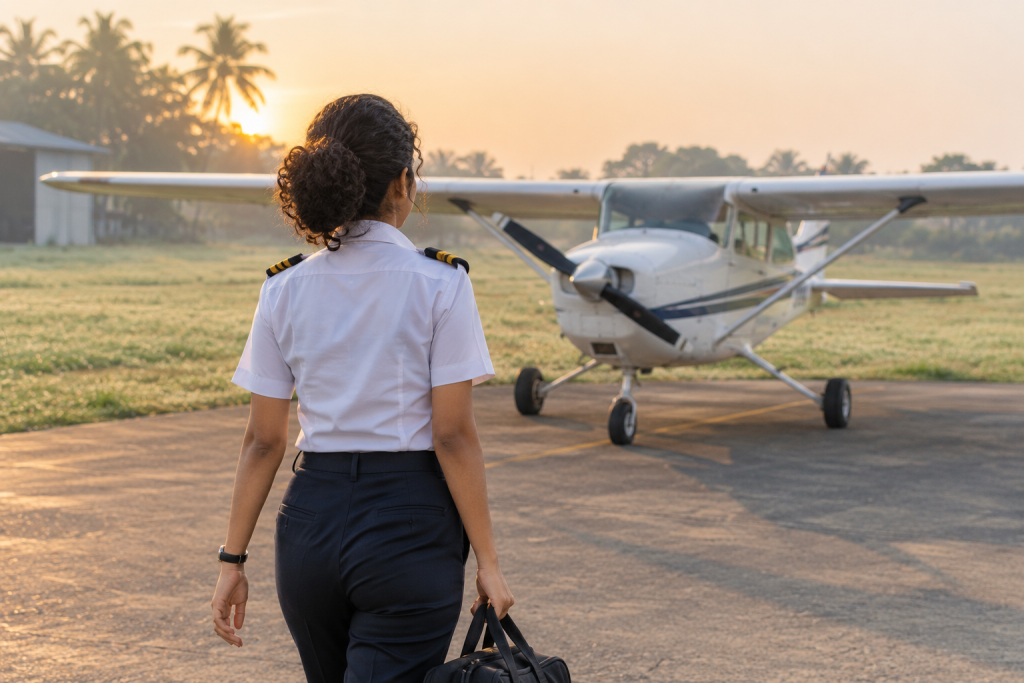
A cadet program is an airline-linked training pathway. You apply to the airline, clear its selection rounds, and then train through its approved flying schools. The airline designs the syllabus, including the type rating on its own aircraft.
A self-funded CPL means you choose your own flying school, pay for your own training, and earn a DGCA Commercial Pilot Licence (CPL). After that, you apply to airlines as a licensed pilot.
Here is what each looks like in practice:
- Cadet: airline first, training second.
- Self-funded: training first, airline second.
- Both: need a DGCA Class 1 medical, DGCA ground exams and at least 200 flying hours.
If you are still learning the basics, start with our guide to PPL vs CPL vs ATPL licences in India.
How Does Each Route Work?

The cadet program route
Step 1: Airlines screen for aptitude, communication and background. Most also set rules on citizenship, age and 10+2 subjects, usually Physics, Maths and English. Check each airline’s current criteria.
Step 2: Do ground school. You study Air Regulations, Meteorology, Navigation, Technical and Human Performance for the DGCA exams.
Step 3: This happens at the airline’s approved flying partners, which differ by airline and sometimes by intake.
Step 4: You train on the airline’s aircraft, usually a simulator-based type rating on the jet you will fly.
The self-funded CPL route
Step 1: Get your Class 1 medical early. It is the first thing that can stop a pilot career. Read what gets people rejected in our DGCA Class 1 vs Class 2 medical guide.
Step 2: Finish DGCA ground school. Our DGCA Ground School course covers the exam subjects. Also plan for RTR(A) and ELP, two tests students often leave too late.
Step 3: Complete flight training. At least 200 hours, in India or abroad. Our Commercial Pilot License programme is structured as 185 hours single-engine, 15 hours multi-engine, and instrument training toward the MEIR, typically over 12 to 18 months.
Step 4: Prepare for airline selection and type rating. Many airlines test candidates in stages. Our Airline Preparation for CPL Holders course covers the written exam, aptitude tests, group discussion and interview.
Cadet Program vs Self-Funded CPL: Side-by-Side
| Factor | Cadet Program | Self-Funded CPL |
|---|---|---|
| Who chooses your flying school | The airline | You |
| Typical total cost | ~₹1 crore to ₹1.5 crore (varies by airline and partner) | ~₹45 lakh to ₹65 lakh for CPL, plus type rating |
| Type rating included | Usually yes, on the airline’s aircraft | Usually separate, paid by you or the airline |
| Intake frequency | Limited windows that open and close. Check each airline’s page | You can start any time a school has a batch |
| Selection competition | Very high, at the start | Lower at the start, high at airline hiring |
| Airlines you can apply to | Usually one, the sponsor | Any airline hiring CPL holders |
| Cash needed upfront | Very high | Moderate, and can be staged |
| Job guarantee | Rarely promised in public programme details. | None |
Figures are public estimates. Many airlines do not publish cadet fees openly and share them during the application.
Which Route Actually Gets You Hired Faster?
Here is the honest answer. No one publishes a clean “time to first job” comparison, so anyone quoting you an exact number is guessing.
What we can say from public information:
- Cadet is faster once you are in. Training, type rating and airline onboarding are planned as one pipeline.
- Self-funded is faster to start. You are not waiting for an airline to open applications. Our CPL page lists ground training at about six months and flight training at 12 to 18 months.
- Self-funded adds a waiting gap. After CPL, you still need to clear airline selection and often a type rating.
- The door stays open for CPL holders. Some airlines say they will keep hiring CPL holders and type-rated pilots alongside their cadet programmes. Check each airline’s careers page.
The market is also helping. Industry estimates cited in a June 2026 airline launch release put demand at about 35,000 pilots by 2035, against a current pool of roughly 12,000 to 15,000. Demand is real. But demand does not mean every licence holder gets hired quickly. Read Does a Pilot Course Guarantee a Job? before you commit money. Want a closer look at two airline programmes? See Akasa Air and SpiceJet Cadet Programs Compared.
Key Insights
1. Speed has two clocks. One clock runs until you start training. The other runs until you are hired. Cadet shortens the second. Self-funded shortens the first.
2. Selection is the real bottleneck. A cadet seat depends on clearing aptitude, group and interview rounds. Preparing for them is cheap compared with the programme fee.
3. The two routes are not enemies. You can prepare for cadet selection and still hold a CPL path as backup.
What Does Each Route Really Cost?

| Cost item | Cadet program | Self-funded CPL |
|---|---|---|
| DGCA ground school | Usually bundled | Paid separately |
| Flight training (200+ hrs) | Bundled | Paid separately |
| Class 1 medical, exams, licensing | Often separate | Paid separately |
| Type rating | Usually bundled | Commonly quoted at ₹10 lakh to ₹20 lakh |
| Overall ballpark | ₹1 crore to ₹1.5 crore | ₹45 lakh to ₹65 lakh, plus type rating |
Three cost traps to watch:
- Delay costs money. Extra flying hours and exam reattempts push a ₹50 lakh plan toward ₹70 lakh or more.
- Foreign training moves with exchange rates. If your school bills in USD or EUR, your final number can change.
- “All-inclusive” is not always all-inclusive. Ask what is excluded: accommodation, visas, medical retests, licence conversion.
For a full breakdown, see The Complete Cost of Becoming a Pilot in India in 2026 and our CPL cost comparison across India, Philippines, South Africa, Greece and the US. Worried about affordability? Read Pilot Training for Middle-Class Families in Kerala.
What Are the Pros and Cons of Each Route?
Cadet program
Pros
- One structured pipeline from zero experience to a type-rated pilot
- Airline-aligned syllabus and standards
- No separate hunt for a type rating
Cons
- Very high cost
- Few intake windows, and strong competition
- You are tied to one airline’s timeline and decisions
Self-funded CPL
Pros
- Lower overall cost, which you can often stage over time
- You choose the school, country and pace
- You can apply to several airlines once licensed
Cons
- You carry the hiring risk
- Type rating is a separate step, and sometimes a separate bill
- Weak airline-selection prep can stall a fully licensed pilot
Real-World Scenarios: Which Route Fits?

These are illustrative profiles, not individual case studies.
Scenario 1: The student with a strong academic record and family funding. Apply to cadet programs when they open. Prepare early for aptitude and interviews. Keep a CPL plan ready if the intake closes.
Scenario 2: The student with a limited budget. Self-funded CPL in a cost-efficient country or in India is the realistic path. Build a funding plan, then train in stages.
Scenario 3: The student who cannot wait for the next intake. Start ground school now. A DGCA ground course is useful for both routes, since cadet programs also require you to pass the same DGCA exams.
Scenario 4: The career-changer aged 28 to 35. Check each airline’s age limit first, since caps differ. Then compare the cadet fee against self-funding and a longer job search.
The Hybrid Plan: Prepare for Cadet, Keep CPL as Backup
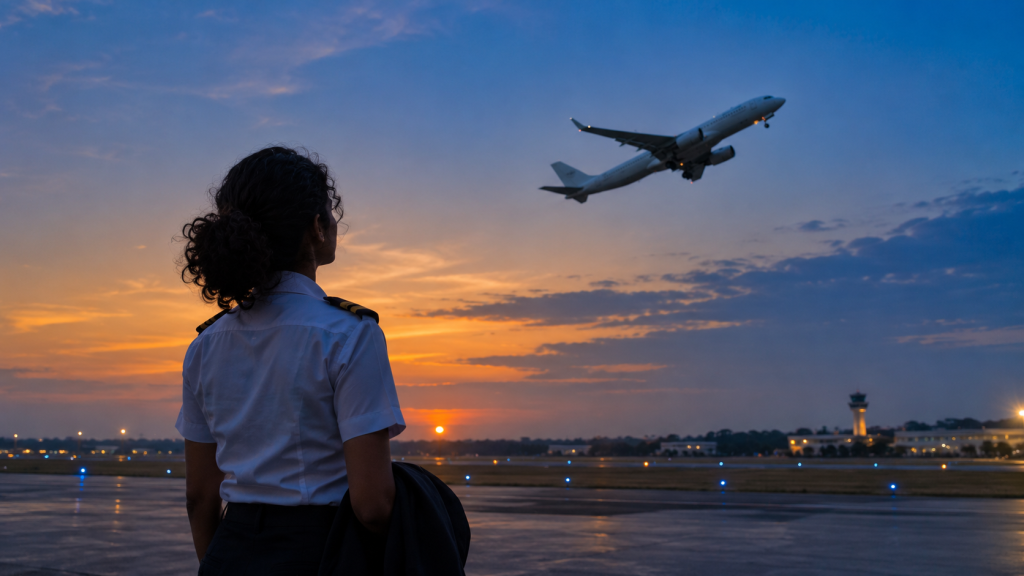
Many students treat this as an either-or choice. It does not have to be.
- Train your selection skills first. Aptitude tests (ADAPT, COMPASS and similar), group discussion and interviews apply to both routes.
- Finish your medical early. It is required either way.
- Decide on funding after you know your options. Do not pay a large fee before you have checked the programme’s written terms.
Our Cadet Pilot Preparation course is built for exactly this: aptitude assessments, group discussions and mock interviews for airline cadet selection.
If you later go the CPL route, you move into the Commercial Pilot License programme without starting over.
Common Mistakes to Avoid
1. Choosing on cost alone. Why it is bad: the cheapest quote can come with hidden extras or long delays. Fix: ask for a written fee breakup, including what is excluded.
2. Skipping the medical. Why it is bad: a failed Class 1 medical after you have paid fees is a painful discovery. Fix: take the medical before paying for anything. See our medical guide.
3. Treating a cadet seat as a job guarantee. Why it is bad: Akasa’s launch release did not state a job commitment. Terms vary by airline. Fix: read the programme’s written terms and ask directly.
4. Ignoring airline selection prep after CPL. Why it is bad: airline launch announcements do not always state a job commitment. Terms vary by airline.
5. Relying on social-media “guarantees”. Why it is bad: many guides repeat each other without checking airline pages. Fix: confirm eligibility and dates on the airline’s own site.
How to Decide in 5 Minutes
Answer these honestly:
- Can your family fund ₹1 crore or more without heavy debt? If no, lean self-funded.
- Is a cadet intake open right now? If no, start ground school and build selection skills.
- Do you want to fly for one specific airline? If yes, track that airline’s cadet page.
- Are you comfortable job-hunting after CPL? If yes, self-funded works.
- Is your medical clear? If you do not know, find out first.
Key Takeaways
- Cadet is faster after selection. Self-funded is faster to start.
- Cadet programs are commonly quoted at ₹1 crore to ₹1.5 crore. Self-funded CPL costs ₹45 lakh to ₹65 lakh before type rating.
- Neither route guarantees a job. Ask for written terms.
- Medical, ground school and interview skills help on both routes.
- Preparing for both routes protects you if an intake closes.
Frequently Asked Questions
Q: Is a cadet program better than a self-funded CPL?
A: Not always. A cadet program gives a structured airline pathway but costs more and has limited seats. A self-funded CPL costs less and gives you more flexibility, but you handle airline hiring yourself. The better route depends on your budget, timeline and selection readiness.
Q: How much does a self-funded CPL cost in India?
A: Public estimates commonly range from about ₹45 lakh to ₹65 lakh for CPL training, depending on the school, location and delays. Type rating is usually extra. Ask any school for a written fee breakup before you commit.
Q: Do cadet programs guarantee a pilot job?
A: Programmes are built to lead into the airline, but public announcements do not always promise a job. Some launch announcements do not mention a job commitment. Check each programme’s written terms, and ask directly before you pay
Q: Can I do a self-funded CPL and still join an airline later?
A: Yes. Airlines hire CPL holders directly, and some airlines say they will keep hiring CPL holders and type-rated pilots alongside their cadet programmes. You will still need to clear the airline’s written, aptitude, group and interview stages.
Q: Should I prepare for a cadet program while doing ground school?
A: Yes. DGCA ground exams apply to both routes. Aptitude, group discussion and interview skills also transfer. Preparing early keeps both options open and avoids losing a year if an intake opens suddenly.
Conclusion
A cadet program is the more direct route into one airline once you are selected. A self-funded CPL is the lower-cost, more flexible route that you can start now. Neither route guarantees a job, so the smartest move is to prepare for both.
Start with your medical, DGCA ground school and selection skills. Then pick the route that matches your budget and timeline, with written terms in hand.
Not sure which route fits your budget and timeline?
Talk to an Aerowis advisor in Calicut. You get honest guidance on eligibility, timelines and costs before you pay anything.
Talk to a Career Advisor Explore the CPL CourseOr call +91 8594 000 730 (Mon to Sat, 9:30 am to 5:30 pm)