01
Everything in one place
Classes, practice sessions and advisor support are coordinated from our Calicut campus, so you spend your time learning instead of chasing separate training providers.
Home / Courses / Private Pilot Licence
Aerowis Aviation’s Private Pilot Licence (PPL) programme provides the theoretical knowledge and practical flying skills required to operate a single-engine aircraft for personal or recreational purposes.
The programme combines structured ground training with practical flight sessions under the guidance of experienced instructors.
Talk to a Career Advisor Commercial path
4–6 Months Typical programme duration
PPL Private, non-commercial
Single-Engine Aircraft training
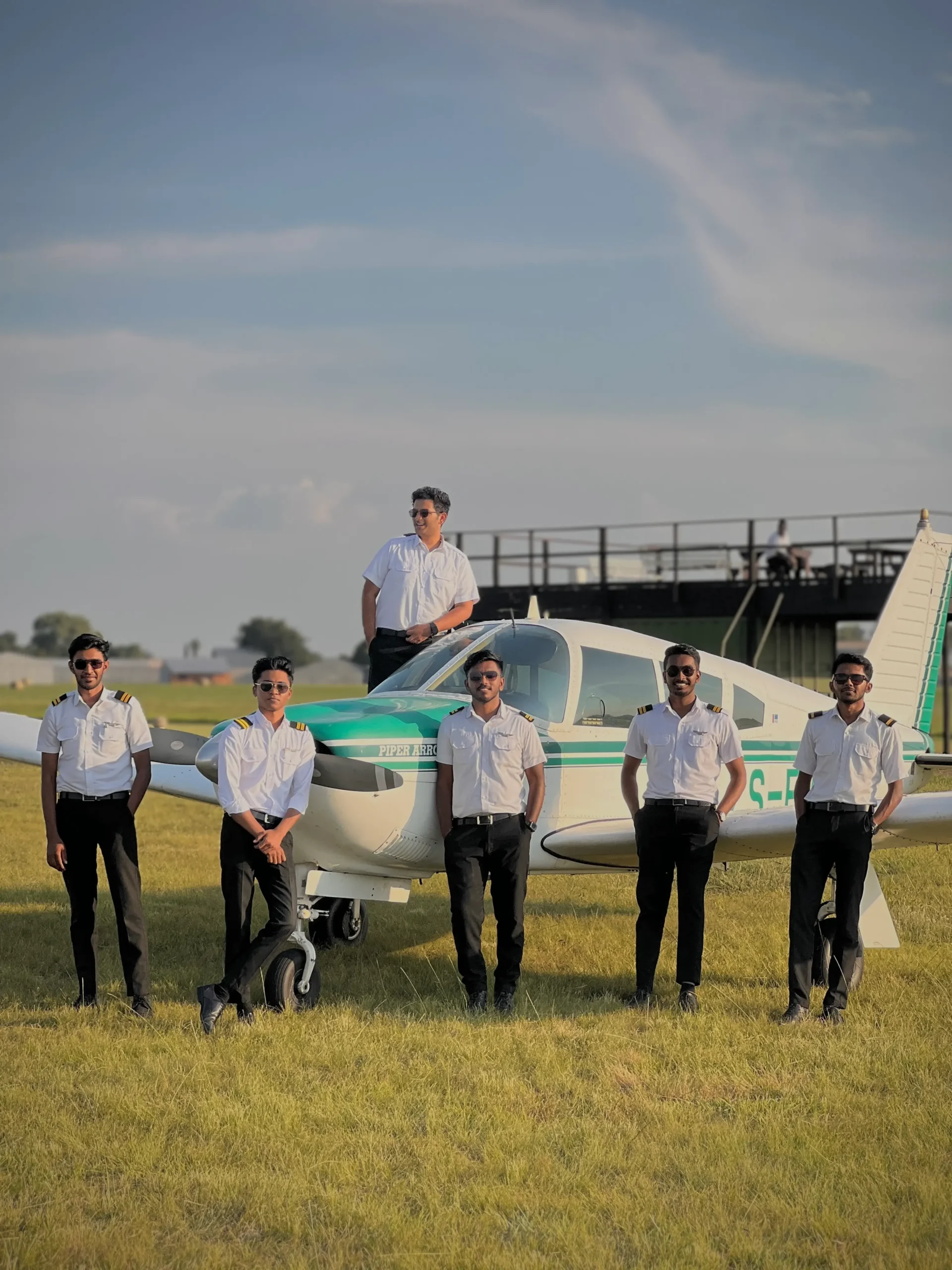
The programme combines classroom preparation with practical flight training, progressively developing the skills required to operate an aircraft safely and confidently.
Build the theoretical foundation required for private flying.
Develop aircraft-handling skills through instructor-led flight sessions.
Progress towards independent flying and build confidence as Pilot-in-Command.
Apply your training across different flight conditions and operational situations.
Complete your practical flight training through our selected flight-training partners, with locations available based on your training requirements.
Training availability varies by location and partner school.
Upon successful completion of the programme, candidates can qualify to fly as Pilot-in-Command (PIC) of single-engine aircraft for non-commercial operations.
For those who later choose to pursue flying professionally, the PPL can also provide a foundation for progressing towards a Commercial Pilot Licence (CPL).
Why Aerowis
01
Classes, practice sessions and advisor support are coordinated from our Calicut campus, so you spend your time learning instead of chasing separate training providers.
02
Vivas, group discussions and presentations build the confidence and communication airline interviews ask for, so you are well prepared long before selection day arrives.
03
Aerowis maps out what comes next: partner flight schools in India and abroad, then dedicated airline preparation once you hold your Commercial Pilot Licence.
04
Get honest guidance on eligibility, timelines and costs before you pay anything, so you can decide with the full picture and no surprises later.
A Private Pilot License (PPL) lets you act as pilot-in-command of a single-engine aircraft for non-commercial flying. You cannot be paid to fly with it. At Aerowis, the PPL path combines structured theory with flying hours at partner schools.
No. Many students move from a PPL to a Commercial Pilot License, but you can start the CPL path directly from Class 12 with DGCA ground training. A PPL suits you if you want to fly for yourself, or to try flying before committing to the longer, costlier CPL route.
Theory covers air navigation basics, meteorology and air regulations for private operations. Practical training includes flight sessions and solo flying at partner schools, working toward pilot-in-command on single-engine aircraft. The aim is cross-country confidence before you decide whether to continue to commercial training.
Flying takes place at partner schools in India, the Philippines, South Africa, Greece and the United States, coordinated by Aerowis. The schools are not named on the course page, so ask the advisory desk which location fits your budget, travel plans and available time.
Yes, as a first step. The professional path then needs 200 or more flying hours, multi-engine and instrument work, and airline preparation, with no job guarantee. Hours flown on a PPL may count toward later training, so ask the advisory desk how your hours would be used.
These depend on your medical, school choice and schedule, so Aerowis handles them through a call with the advisory desk rather than a fixed page. Call or WhatsApp +91 8594 000 730 or email info@aerowis.com and ask for eligibility, duration and a written fee breakup.
A PPL lets you fly for yourself but not for pay. A CPL lets you work as a professional pilot. The CPL needs more hours, a Class 1 medical and extra ratings. Many students try a PPL first to confirm they enjoy flying.
Yes. You need a valid DGCA medical before flying solo, and it is wise to get it done before you pay for training. If you later plan to go commercial, a Class 1 medical is required, so check that early to avoid surprises.
No. A PPL covers non-commercial flying on light aircraft. Airliners need a Commercial Pilot License, an instrument rating and a type rating for that aircraft, such as the A320 or B737. Airlines also run their own selection and training.
It can be, if flying is your goal and not a salary. You get licensed to fly yourself and friends or family. Costs depend on the school and the hours you need, so request a written breakup from the advisory desk before deciding.
Eligibility, medicals and which partner school fits your timeline belong on a call with the desk.