Table of Contents
Short Answer
Yes, it is possible—but it requires careful financial planning. Pilot training in Kerala can cost around ₹25–₹55 lakh for CPL training, while the total cost of reaching an airline cockpit can be significantly higher after adding expenses such as a type rating.
Many middle-class families explore education loans, scholarships, government-backed training options, or a combination of funding sources. The key is to compare the academy, total fees, loan terms, and expected career path before committing.
Quick Facts
- Full journey (CPL + type rating): about ₹55 lakh to ₹95 lakh, depending on the school and route
- State-run academy, 200 hours single-engine (2026 intake notice): about ₹45.75 lakh in 5 instalments; multi-engine is extra
- DGCA ground classes: about ₹1.5 lakh to ₹3 lakh
- Type rating: separate cost, about ₹12 lakh to ₹35 lakh depending on source
- Bank loans: up to ₹40 lakh to ₹1.5 crore depending on the lender; collateral usually needed above ₹7.5 lakh
- Typical interest: roughly 8% to 13% a year, varies by lender
- Biggest risk: EMIs starting before your first salary
The problem every Kerala parent runs into
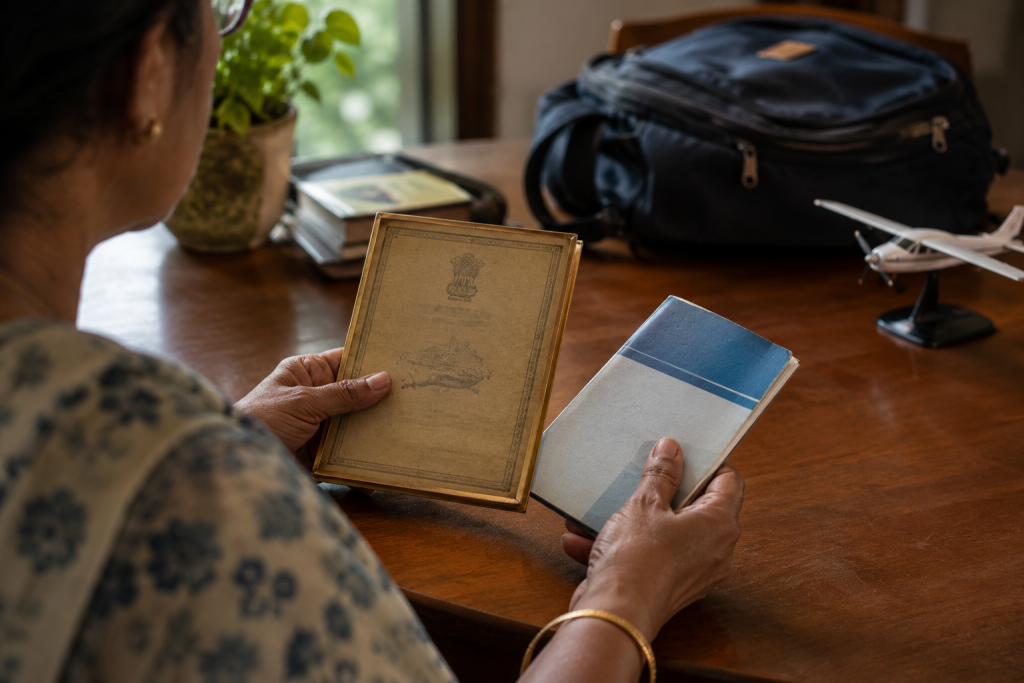
Your son or daughter says, “I want to be a pilot.” You are proud. Then someone at the tea shop says “₹50 lakh,” and the room goes quiet.
Most middle-class families in Kerala do not have that sum in a bank account. They have a house, a small plot, maybe a Gulf income, and a steady salary. The question is not “do we love the idea?” It is “can we do this without losing the house?”
This guide answers that with real numbers, honest limits and options that suit an ordinary family budget. It also links the money question to the job question, because the loan only makes sense if the career follows. We cover the job side in is CPL training worth it: a complete career analysis and the airline selection process in India for fresh CPL holders, and the eligibility steps are in our pilot course after 12th in Kerala guide. For a line-by-line breakup, read the complete cost of becoming a pilot in India in 2026.
How much does pilot training really cost in Kerala?
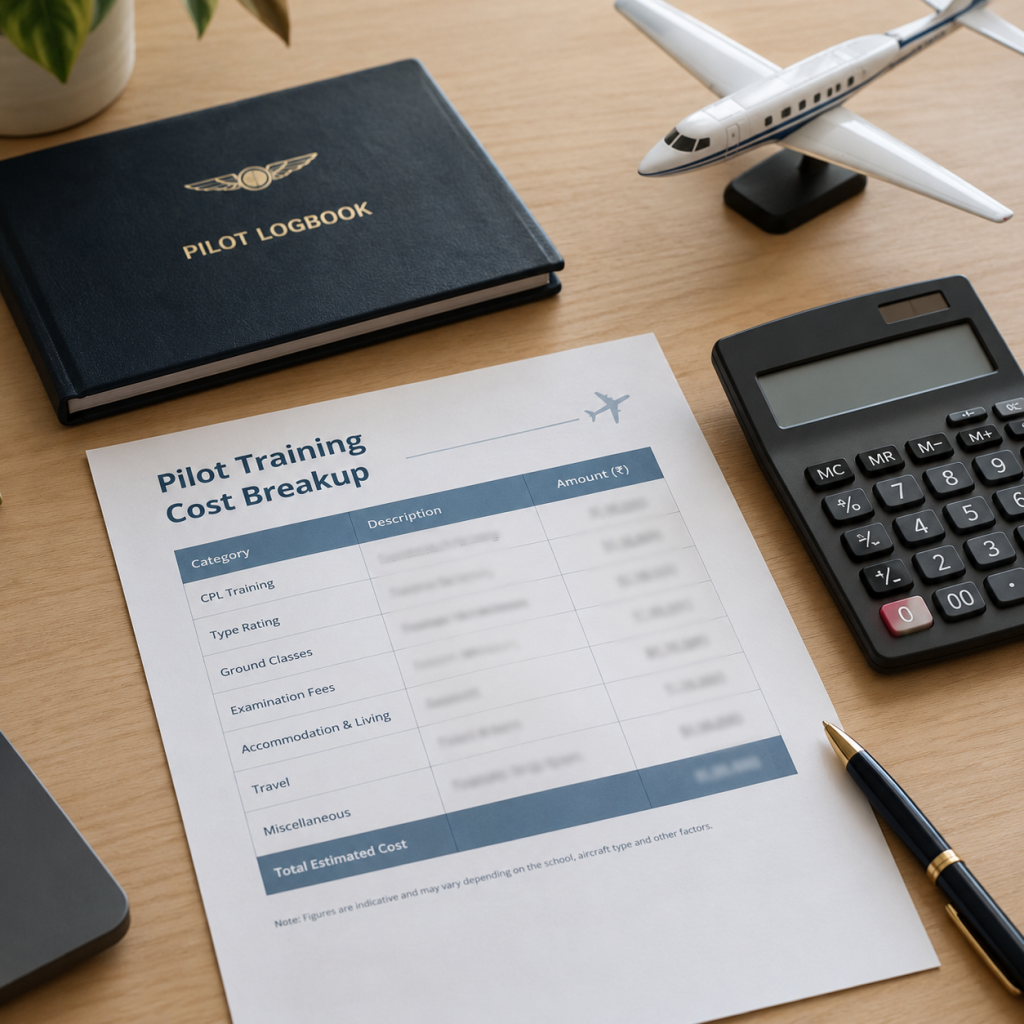
Costs depend on three things: the school, the route and how long flying takes. Here are the figures reported in 2024 to 2026 sources. They differ between sources, so treat them as ranges and ask each school for a written breakup.
| Cost item | Typical range | Notes |
|---|---|---|
| DGCA ground classes | ₹1.5 lakh to ₹3 lakh | Local ground school keeps this low. Explore DGCA Ground School at Aerowis |
| Flying training, state-run academy | About ₹46 lakh for 200 hours single-engine (2026 intake notice) | Multi-engine training is billed separately. The 2026 application window has closed, so confirm the next intake and fee |
| Flying training, private school | About ₹40 lakh to ₹75 lakh | Varies by aircraft, hours and location |
| Exams, medicals, licence fees | Under ₹1 lakh in most estimates | Class 2 now, Class 1 before the CPL |
| Type rating | About ₹12 lakh to ₹35 lakh | Separate cost for most freshers. Explore the type rating course |
| Living costs during training | Varies | Hostel, food, travel, uniform |
| Waiting period buffer | Varies | The cost families forget most |
| Airline cadet programme | About ₹85 lakh to ₹1.2 crore | Bundles type rating, selection rules apply |
Three realistic budget scenarios
| Scenario | Route | Rough total |
|---|---|---|
| State-run academy | State-run academy for flying (plus multi-engine) + type rating | About ₹65 lakh to ₹90 lakh |
| Typical | Private school in India + type rating | About ₹55 lakh to ₹95 lakh |
| Cadet | Airline cadet programme | About ₹85 lakh to ₹1.2 crore |
So, is it affordable for a middle-class family?
Honest answer: it depends on four numbers.
- Your total cost (the whole chain, not only the CPL fee)
- What you can pay without borrowing (savings, family help)
- The EMI you can carry for 12 to 24 months with no income from the pilot
- The collateral you can safely offer
If the EMI would be a heavy stretch even on paper, pause and look at the cheaper routes below before you sign anything.
Education loans for pilot training: how they work
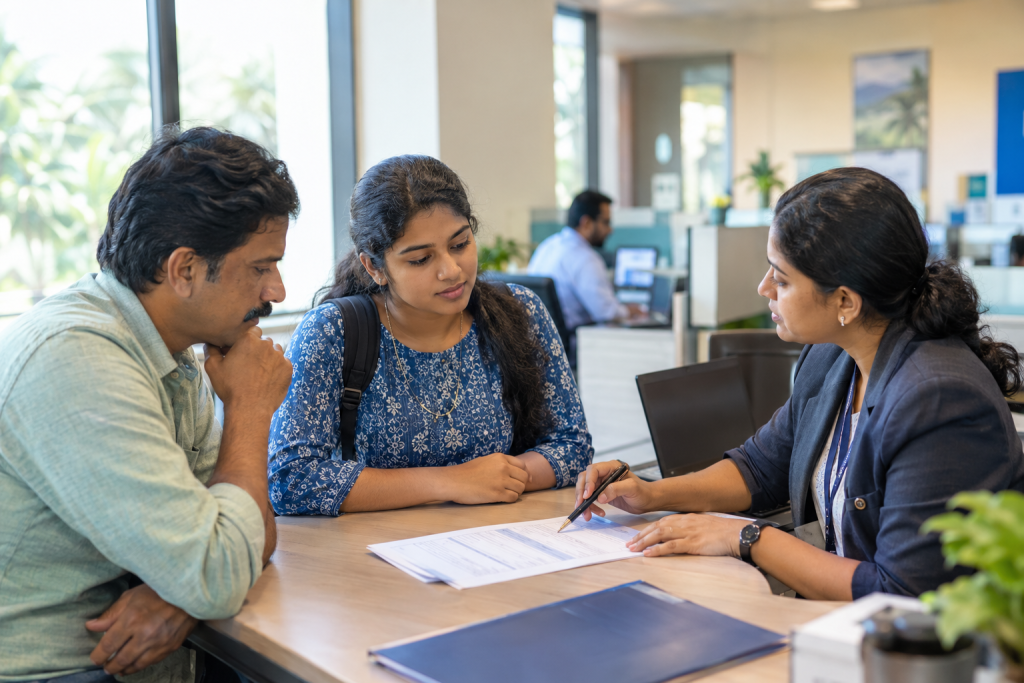
Banks do lend for pilot training. Public sector banks and some private lenders offer education loans for CPL courses, usually for approved flying schools. Figures below come from a 2026 lender comparison and are indicative only, so check with each bank.
| Lender | Maximum loan reported | Interest range reported (per year) |
|---|---|---|
| SBI | ₹50 lakh to ₹1 crore | 8.15% to 10.90% |
| Bank of Baroda | Up to ₹1.5 crore | 8.55% to 10.55% |
| Punjab National Bank | Up to ₹50 lakh | 8.80% to 10.95% |
| Canara Bank | Up to ₹40 lakh | 9% to 11% |
| HDFC Credila | Up to ₹75 lakh | 10.5% to 13% |
| Tata Capital | Up to ₹50 lakh | 12% to 12.5% |
What the bank will ask for
- Admission letter from a DGCA-approved flying school
- A fee schedule from the school, in writing
- A co-borrower, usually a parent
- Collateral for larger loans (public sector banks commonly ask above ₹7.5 lakh)
- Income proof of the co-borrower
- Medical clearance, because a failed medical changes the risk
Moratorium and repayment
Repayment usually starts after the course ends, with a grace window the source puts at roughly 6 to 12 months. Interest builds up in the meantime, so the amount you start repaying can be higher than the amount you borrowed. Ask your bank exactly how interest is treated during the course.
What the EMI looks like
| Loan | Rate | Tenure | Approx. monthly EMI |
|---|---|---|---|
| ₹30 lakh | 9% | 10 years | ₹38,000 |
| ₹50 lakh | 9.5% | 12 years | ₹58,000 |
| ₹50 lakh | 10.5% | 12 years | ₹61,000 |
| ₹75 lakh | 10% | 15 years | ₹81,000 |
| ₹75 lakh | 11% | 12 years | ₹94,000 |
Calculated using the standard EMI formula for illustration. Real EMIs depend on the bank’s rate, fees and how the loan is disbursed.
Reality check: a ₹50 lakh loan with a ₹58,000 EMI means roughly ₹7 lakh a year to repay, even if the first job takes a year to land. Can your household cover that, from other income, for 12 to 24 months? If not, reduce the borrowing or lengthen the plan.
Scholarships and government support in Kerala
Kerala has fewer pilot-specific schemes than people hope, so check each one carefully.
- SC/ST students at the state academy. In 2021 the Kerala government announced that SC/ST students who clear the entrance exam and are admitted to the state-run flying academy would have their fees (about ₹25 lakh at that time) funded by the state. The report doesn’t give deadlines or the application process, and academy fees have risen since then, so confirm what the support covers today with the academy and the SC/ST department.
- Relaxed eligibility. The state-run academy’s 2026 intake notice asked for 50% overall and a combined 55% in Maths, Physics and English for the general category, and 45% and 50% for SC/ST/OBC candidates, with a minimum age of 17.
- Minority community loans. The Kerala State Minorities Development Finance Corporation (KSMDFC) lists education loan schemes with low interest, but its page does not say that pilot training qualifies. Call them before assuming it does.
- Other states’ schemes. Some states run special pilot loans, for example Gujarat’s 4% loan for eligible backward-class students, but those are for that state’s residents only. Don’t build a plan on a scheme your family can’t use.
Be careful here. Nobody should promise you a “100% scholarship” for pilot training. If you hear one, ask for the scheme’s name, the issuing department and the written eligibility rules.
Ways to bring the cost down
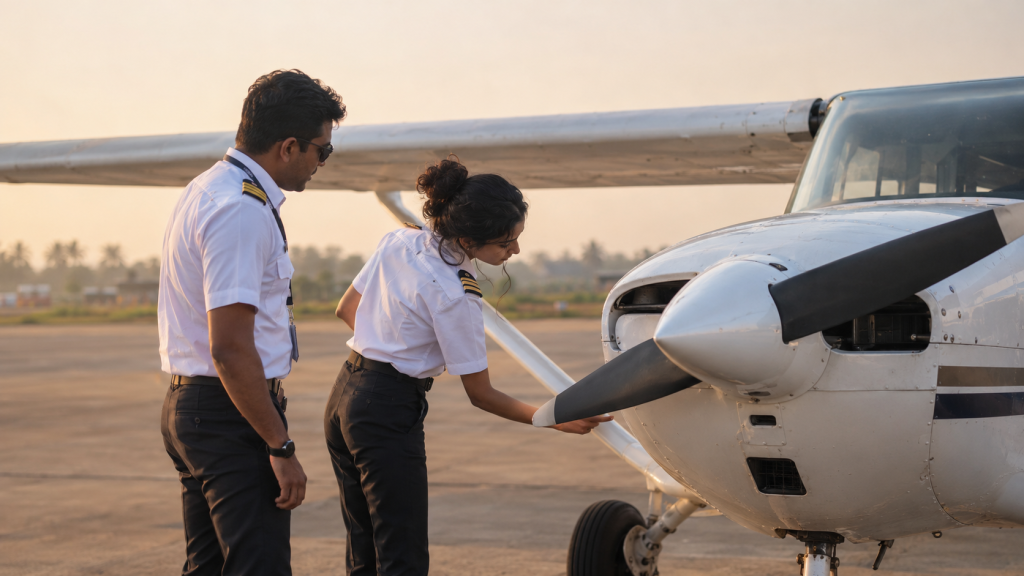
You can’t remove the cost, but you can cut a lot of it. Smart families do these things.
1. Look at the state-run academy route
Kerala’s state-run, DGCA-approved flying academy selects students through a written test and an interview. Its 2026 notice listed about ₹45.75 lakh for 200 hours of single-engine flying, paid in five instalments, with multi-engine training billed separately and an application fee of ₹5,500 (₹3,000 for SC/ST). The 2026 application window has already closed, so plan for the next intake. The sticker price is not the lowest on the market, but the instalment plan, relaxed eligibility for SC/ST/OBC candidates and possible fee support can make it easier to plan. Seats are limited, so apply, but don’t depend on it as your only plan.
2. Pay for ground school locally
DGCA ground classes cost a small fraction of the whole journey. Doing them in Kerala saves on living costs, and you can test your interest, your exam skills and your medical eligibility before committing to a big flying fee. Explore our pilot courses at Aerowis and the DGCA Ground School in Calicut.
3. Do the medical first
A failed Class 1 medical can end the plan. Spend a few thousand rupees early. It is the cheapest insurance in the whole journey. Our guide to medical fitness requirements for commercial pilot aspirants in Kerala explains what is checked, and the admission guide lists the steps.
4. Compare India with abroad honestly
Abroad can look cheaper or faster, but you add travel, stay and licence conversion. For Indian airlines, training in India is often the simpler path. Read our comparison: pilot training in India vs abroad.
5. Pay in stages, not all at once
Ask whether fees are paid in instalments tied to flying progress. That way, if something changes, you haven’t paid the whole sum up front. Never pay a large lump sum before you have seen the aircraft, instructors and agreement.
6. Choose a school for quality, not the lowest price
The cheapest quote often hides extra hours, retests or delays. Use the checklist in top features of a pilot training academy in Kerala to compare schools like for like. Also read how to choose the best aviation training academy in Kerala, what makes a good DGCA ground training institute and DGCA-approved pilot training academy in Kerala: what you should know.
Key Insights
- The real number is the whole chain: CPL, type rating, living costs and a waiting buffer.
- Local ground school and a careful comparison of written quotes can cut a large part of the cost.
- Scholarships exist but are narrow. Ask for the written rules before relying on one.
- The biggest danger is EMIs starting before the first salary.
The costs families forget
Many budgets stop at the CPL fee. These usually come after.
- Type rating: a separate bill for most freshers (read what a type rating course is and why it matters)
- Extra flying hours if training runs long
- Exam retakes and re-registration
- Living costs during the 18 to 24 months of training
- Recruitment costs: travel and fees for airline tests
- The waiting period: the time between CPL and first salary, with EMIs running
Reports on India’s pilot job market describe thousands of CPL holders without jobs at times, and waits that run from months to a few years. Plan for the bad case, not the best one.
Protecting the family: loan safety checklist
Before You Sign Any Loan
- Calculate the bad case. Can the family pay the EMI for 12 to 24 months without the pilot’s income?
- Know the collateral. Which property is mortgaged, and who owns it?
- Ask how interest works during training and the grace period.
- Budget the type rating separately. Don’t assume the loan covers it.
- Ask about a borrower insurance cover and what it pays if the earning parent falls ill.
- Read the prepayment and penalty rules.
- Avoid unregulated lenders and agents who push loans before showing the school’s approval.
- Get everything in writing, from the school and the bank.
Education loan interest may also qualify for an income tax deduction. The rules changed with the new Income Tax Act, so ask a chartered accountant which section applies now before you count on it.
Is pilot training worth it for a middle-class family?
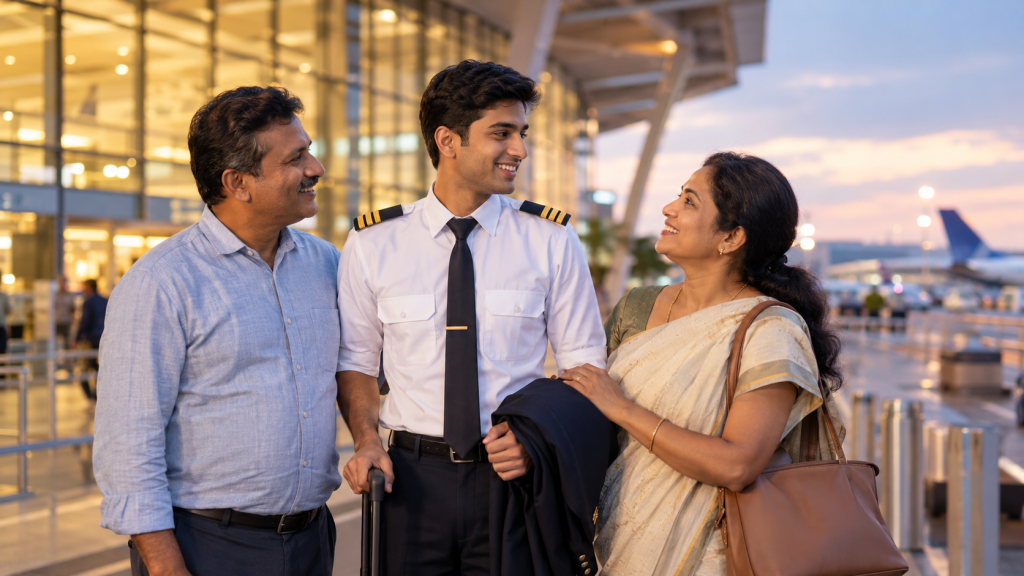
It can be, if three things are true:
- You pass the Class 1 medical.
- You can fund the whole chain, including the type rating and a waiting period.
- The student prepares seriously for airline selection, not just flying.
Long-term demand is strong (Read demand for airline pilots in 2026 and pilot salary in India in 2026). CAPA, an aviation research firm, estimated India will need about 10,900 additional pilots by 2030. But entry-level seats and new CPL holders do not always match in a given year. So the answer depends on your plan, not on the course itself.
Who should consider it
Start with what students should know before joining a CPL program and can average students become pilots.
- Families who can cover the worst-case EMI period from stable income
- Students with a clear medical and strong Maths and Physics
- Families who have compared at least three schools in writing
- Students willing to take a backup route (instructor, degree alongside, other aviation roles)
Who should wait or choose another route
- Families who would have to risk their only home with no buffer
- Anyone relying on a “guaranteed job” promise
- Students who haven’t checked the Class 1 medical
- Families being pushed to pay quickly
Backup plans that protect your investment
- A degree alongside flying. Some programmes combine a CPL with a degree, which gives you a fallback.
- The instructor route. Becoming a flight or ground instructor lets you build hours and earn while you wait.
- Other aviation roles. Dispatch, operations, safety and training roles value pilot knowledge.
- A savings buffer. Aim for at least 12 months of EMI and living costs.
Compare options in pilot vs cabin crew vs ground staff and global opportunities after completing pilot training. Browse more guides on the Aerowis blog and meet the licensed pilots who teach at Aerowis.
Why start with ground school in Calicut
If your family is still deciding, ground school is the lowest-cost, lowest-risk first step. You learn how the exams work, meet pilots who have done the journey, and get clear answers on medical and eligibility before the large payments begin.
Aerowis Aviation in Calicut offers a six-month DGCA ground school, DGCA computer number assistance, medical guidance and conversion flying support. Aerowis states clearly that it does not guarantee job placements, and focuses on airline preparation and career guidance. Explore our Commercial Pilot License course, the Private Pilot License course and cadet pilot preparation, and read why Aerowis is considered the best pilot training academy in Kerala and why students in Calicut are choosing aviation careers. You can also read about our aviation training institute in Calicut and aviation training courses in India.
Key Takeaways
- Budget roughly ₹55 lakh to ₹95 lakh for the full route, and confirm each figure in writing.
- Do the Class 1 medical early and ground school locally before big payments.
- Test the EMI against 12 to 24 months with no pilot income.
- Compare at least three DGCA-approved schools and avoid job-guarantee promises.
- Keep a backup plan: a degree, an instructor route or another aviation role.
Frequently asked questions
Can a middle-class family in Kerala afford pilot training?
Yes, but it takes planning. The full route costs roughly 55 lakh to 95 lakh rupees, so most families use an education loan, a government academy seat, or a mix of both. Before you commit, work out your worst-case EMI period and keep some savings aside as a buffer.
How much does pilot training cost in Kerala?
Expect to pay anywhere from about 45 lakh to 75 lakh rupees for flying, depending on the school. The state-run academy’s 2026 notice listed around 45 lakh 75 thousand rupees for 200 hours of single-engine flying, and multi-engine training costs extra. Private schools range from about 40 lakh to 75 lakh rupees. On top of that, ground classes add 1.5 to 3 lakh rupees, and the type rating adds another 12 to 35 lakh rupees.
Can I get a bank loan for pilot training?
Yes, several banks offer education loans for it. Maximum amounts are reported to range from 40 lakh rupees to 1.5 crore rupees. You’ll usually need admission to an approved flying school and a co-borrower, and larger loans often need collateral. Terms change, so check each bank’s current rules.
Is there a Kerala government scholarship for pilot training?
There is some support for SC and ST students. In 2021, Kerala announced fee support for SC and ST students admitted to the state-run flying academy. The report I found didn’t publish details like deadlines, so confirm with the academy and the SC/ST department. Please don’t assume any other scheme applies unless you see the rules in writing.
Is a pilot loan risky for a middle-class family?
It can be. Your EMIs may start before your first salary, and the wait for a job can be long. To lower the risk, budget for the type rating up front and keep a 12-month buffer. Understand exactly what collateral you’re putting down. And walk away from any school that promises a guaranteed job.
What’s the cheapest way to become a pilot in India?
There’s no single cheapest route, so compare your options. Take the government-run academy’s published fee, then get written quotes from private schools. Add the type rating to each, and check the instalment terms and any extra flying hours. Seats are limited and selection is competitive, so apply to more than one option and keep a plan B ready.
Should we do ground school before taking a loan?
For most families, yes. Ground school costs far less than flying training, and it lets the student test their exam skills and medical eligibility first. After that, you can pick a flying school with better information and borrow only what you actually need.
Conclusion
Pilot training in Kerala is possible for middle-class families, but it works best as a plan, not a leap. Know the full cost. Check the medical. Start with ground school. Compare at least three schools in writing. Borrow only what the family can carry in the bad case.
The licence is a big achievement. The goal is a pilot career your family can enjoy, not one that costs them their peace of mind.
Planning Your Pilot Journey on a Family Budget?
Talk to the Aerowis team in Calicut about eligibility, ground school costs and a realistic step-by-step plan. We don’t promise jobs. We give straight answers.
Explore DGCA Ground School Call +91 8594 000 730 Email info@aerowis.com