One of the most crucial things for prospective pilots to do before beginning an aviation profession is to understand the distinction between ground school and flight training. Although they concentrate on different facets of training, both are essential elements of pilot education. Flight training promotes practical flying ability, whereas ground school builds theoretical understanding. Together, they prepare students to become confident and professional pilots.
Students at Aerowis Aviation receive complete aviation instruction developed in accordance with DGCA standards, assisting them in building a solid basis for a prosperous aviation career.
What is ground school?
The theoretical portion of pilot training is called ground school. Students must comprehend aviation operations, flight regulations, aircraft systems, weather, navigation, and communication protocols before they may enter the cockpit.
DGCA ground school subjects generally include:
- Air Navigation
- Meteorology
- Air Regulations
- Technical General
- RTR (Radio Telephony)
These courses aid students in understanding aviation fundamentals and becoming ready for DGCA exams. Because pilots must make well-informed decisions during flights, which necessitates a solid theoretical understanding, ground school is important.
Many student pilots and the aviation industry also point out that DGCA ground courses, particularly navigation and meteorology, can seem challenging at first. For this reason, professional assistance and concept-based instruction are essential.
What is Flight Training?
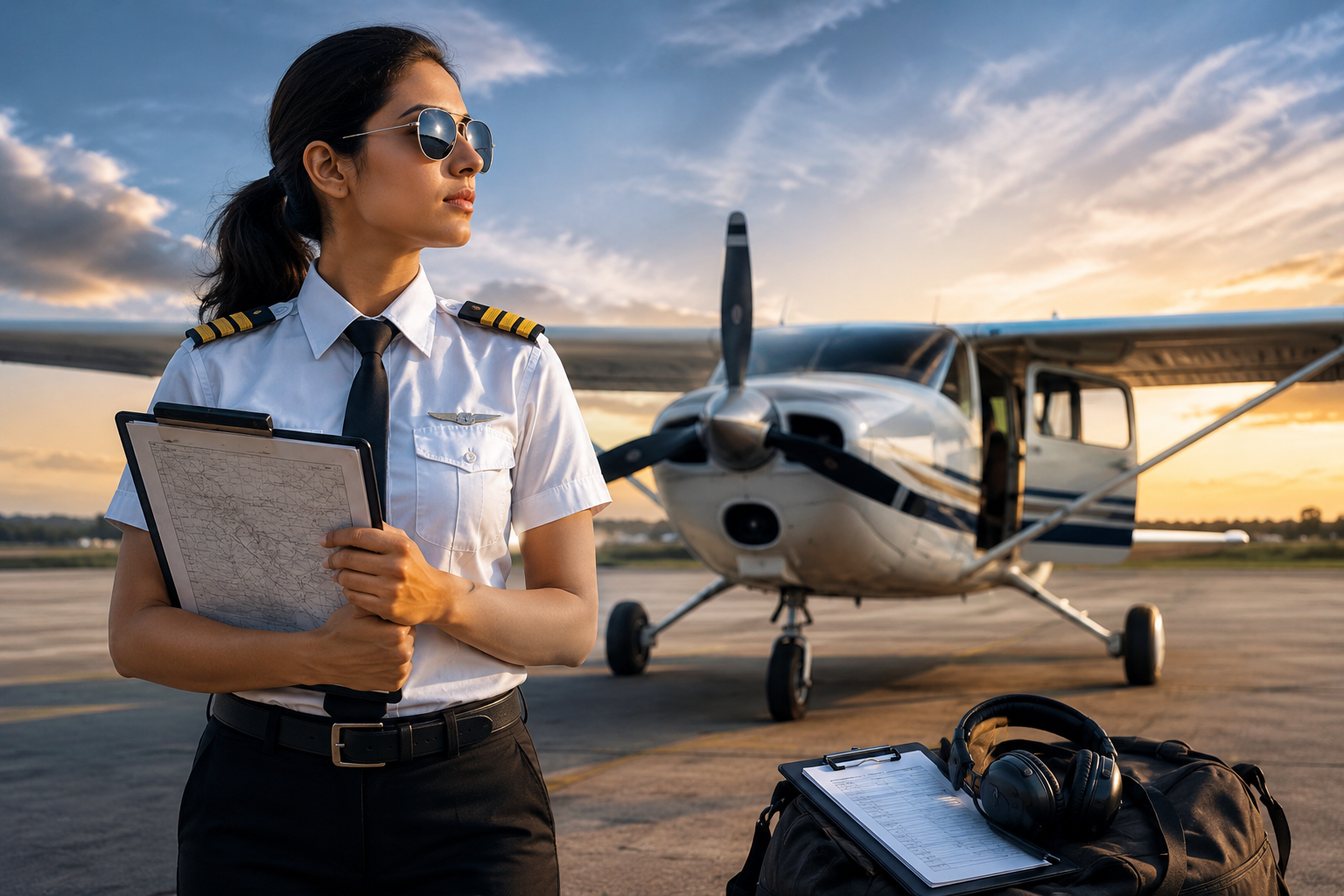
Flight training is the practical phase where students learn to operate an aircraft. During this stage, students gain hands-on experience under the supervision of certified flight instructors.
Flight training includes:
- Handling of aircraft
- Take-off and landing practice
- Navigation flights
- Instrument flying
- Emergency procedures
- Radio communication
- Cross-country flying
Through this instruction, students can put what they learned in ground school to use in actual flying scenarios. In order to get a commercial pilot license (CPL), students must also fulfill the required flying hours. CPL programs typically involve 200 flying hours, according to Indian aviation training regulations.
Key Differences Between Ground School and Flight Training
Although both are connected, their purpose is different. While flight training concentrates on real-world flying experience, ground school concentrates on classroom instruction and aviation theory. Students learn books, aviation charts, regulations, and technical ideas in ground school. Students learn how to fly an aircraft safely by entering the cockpit during flying training.
While flight training helps students acquire the abilities and self-assurance required for actual aviation operations, ground school assists students in passing DGCA exams.
Simply put:
Ground school teaches the “why” behind aviation
Flight training teaches the “how” of flying an aircraft
A successful pilot needs both equally.
Why Both are Important for a Pilot Career
Some students wrongly think that flying is the only aspect of aviation that matters. In actuality, sound theoretical understanding is just as crucial for both decision-making and safety.
When flying, pilots continuously use concepts they acquired in ground school. During flights, weather analysis, fuel estimates, navigation planning, aircraft systems expertise, and aviation rules are all crucial.
Students may have difficulty during flight sessions and DGCA exams if they do not receive adequate ground training. In a similar vein, theoretical knowledge is insufficient to become a pilot without flight instruction.
That is why professional aviation academies combine both training methods to create skilled aviation professionals.
Why Choose Aerowis Aviation?
One of the top aviation academies in Kerala, Aerowis Aviation provides prospective pilots with industry-focused pilot training programs. The academy offers students career help, type rating guidance, ATPL programs, CPL training, and DGCA ground school.
Students choose Aerowis because of the following:
- Experienced instructors in aviation
- DGCA-oriented training programs
- Comprehensive ground school support
- Partnerships for international flight training
- Airline preparation assistance
- Personalized career guidance
- Modern learning approach
Aerowis also supports students with medical guidance, computer number assistance, and airline interview preparation, helping them confidently move from classroom learning to cockpit experience.
Conclusion
Both flight training and ground school are crucial components of aviation education. While flight training develops real flying ability, ground school fosters theoretical comprehension. When combined, they help students get ready for a future in professional aviation.
The journey can go more smoothly and successfully if the right aviation academy is selected. With expert guidance, structured DGCA training, and strong student support, Aerowis Aviation helps aspiring pilots take confident steps toward achieving their aviation dreams.