Table of Contents
Quick answer
To start a pilot course after 12th in Kerala, you need a pass in Class 12 with Physics and Mathematics, a DGCA medical certificate, and admission to a DGCA-approved flying school or a ground school plus flying plan. You will clear DGCA ground exams, complete at least 200 flying hours, and earn your Commercial Pilot Licence (CPL). Most students take 18 to 24 months.
Quick Facts: Pilot Course After 12th in Kerala
- Minimum qualification: Class 12 with Physics and Mathematics (English is also checked by most schools)
- Minimum age: 17 to start training at most academies, 18 to hold a CPL
- Medical: DGCA Class 2 to start, Class 1 for the CPL
- Flying hours for CPL: minimum 200 hours
- Typical timeline: 18 to 24 months from ground school to CPL
- Approximate total cost: about ₹25 to ₹55 lakh, depending on the academy
- Ground school at Aerowis (Calicut): 6 months, DGCA-focused
Pilot course after 12th in Kerala: where do you actually start?
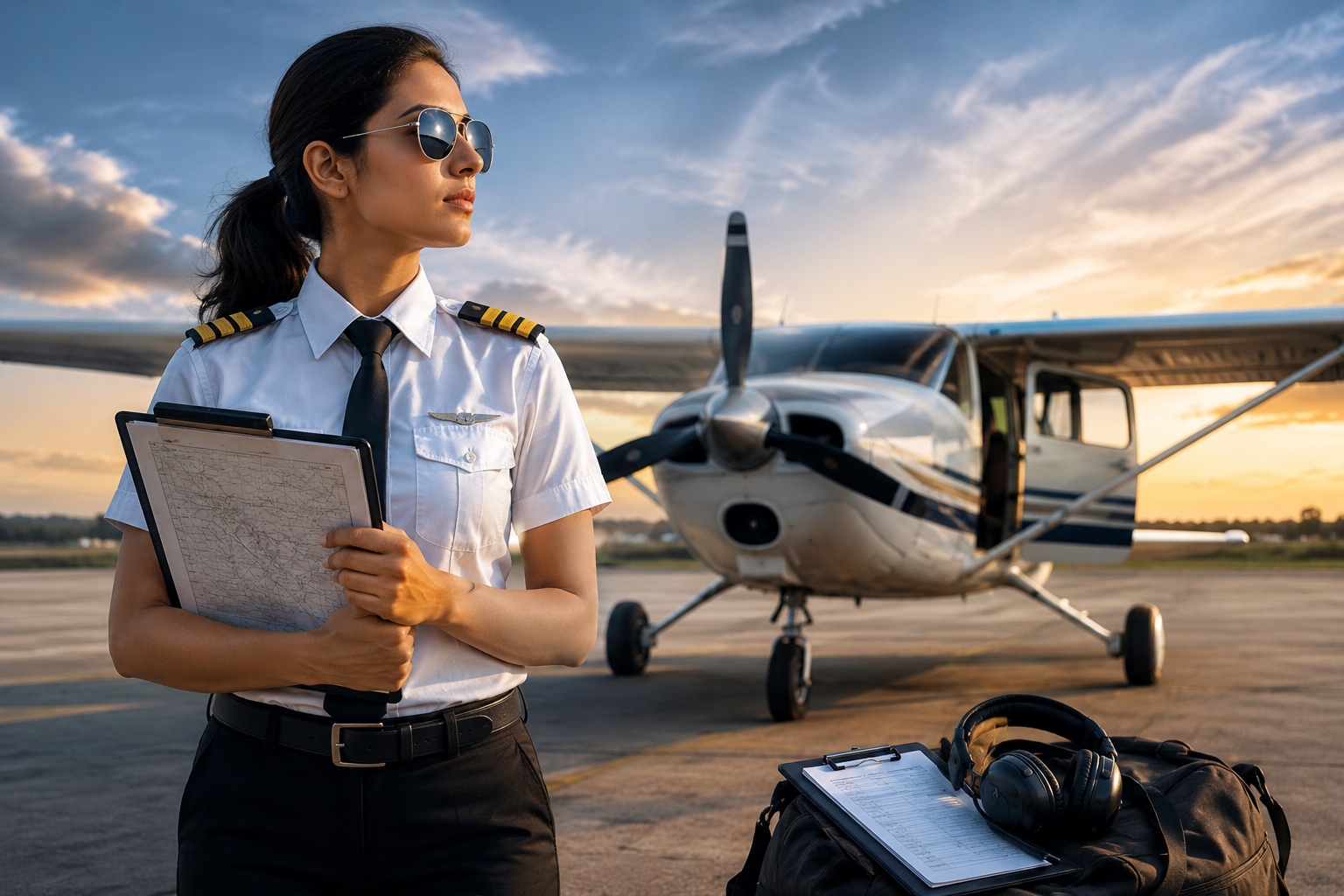
You finished Class 12. Everyone around you is talking about engineering or NEET. You are looking at the sky.
Then the questions pile up. Do I need a flight school in Kerala, or must I go to another state? What medical test do I need? How much will it cost? Which exams come first?
Most students lose months (and sometimes lakhs) because nobody explains the order of things. This guide fixes that. It walks you through the full path to a CPL course in Kerala, from eligibility to your first job, in plain English. Training is demanding, so it also helps to know the common flight training challenges and how to solve them before you begin.
What is a pilot course, and which licence do you need?
A pilot course is a structured programme that trains you to fly an aircraft legally and safely. It has two halves: ground school (theory and DGCA exams) and flying training (hours in the aircraft and a final skill test).
In India, the Directorate General of Civil Aviation (DGCA) issues your licences. Here is how the main ones differ.
| Licence | Full name | Who it is for | Can you earn from it? |
|---|---|---|---|
| SPL | Student Pilot Licence | First step before solo flying | No |
| PPL | Private Pilot Licence | Hobby flying | No |
| CPL | Commercial Pilot Licence | Airline and charter careers | Yes |
| ATPL | Airline Transport Pilot Licence | Captains of large airliners | Yes |
If your goal is an airline cockpit, aim for the CPL. A PPL is useful but not mandatory in India for CPL training. You can read how each course is structured on the pilot courses page at Aerowis.
Eligibility for a pilot course after 12th in Kerala
Eligibility is simple, but small mistakes here cost a full year. Check every point before you pay any fee.
Education
- Pass Class 12 (or equivalent) with Physics and Mathematics
- Many academies also want English as a subject
- Government-run programmes can ask for minimum marks. The Rajiv Gandhi Academy for Aviation Technology (RGAAT) in Thiruvananthapuram, for example, has asked for at least 50% overall and 55% in Maths, Physics and English together for the general category in a past notice. Always check the latest notice.
Age
- Most academies take students from 17 years
- You must be 18 to be issued a Commercial Pilot Licence
Medical
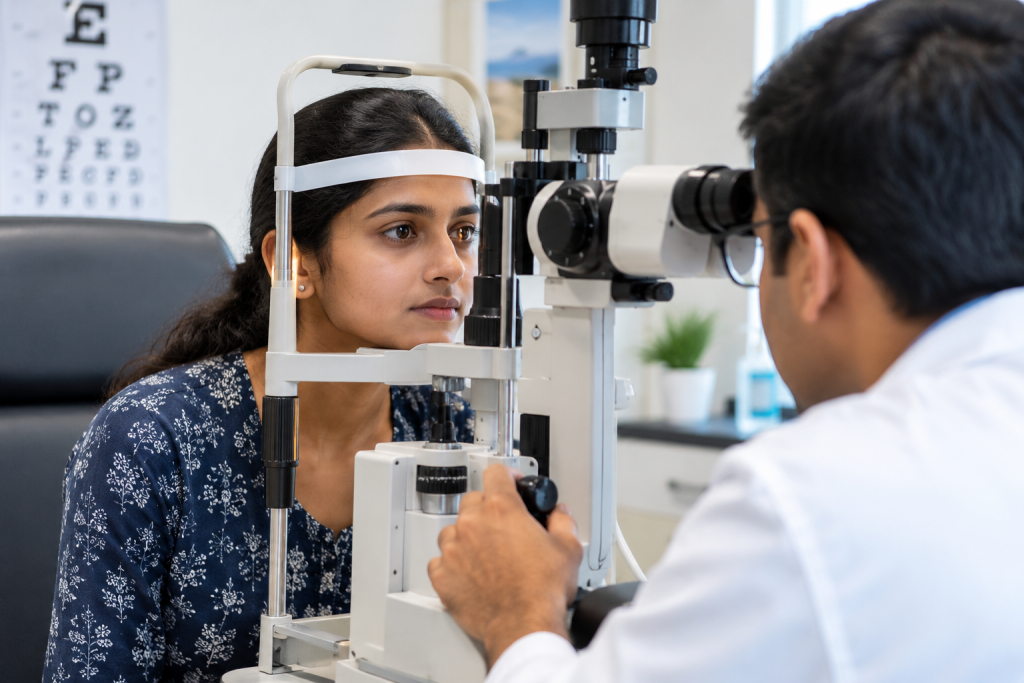
- Class 2 medical to begin training
- Class 1 medical before you take the CPL
- Do the medical early. If you fail a medical later, your ground school fees are already spent.
English
- You need working English for radio calls and exams. This is also tested through the RTR(A) exam.
Real scenario: Anjali, a Class 12 science student from Kozhikode, joined ground classes first and booked her Class 2 medical in month one. She learned she needed a corrective-lens review early, fixed it, and avoided a six-month delay. Early medical checks save both time and money.
Want a quick eligibility check? Our team can review your marks and subjects in one call. See the Aerowis ground school details.
Admission process: step by step
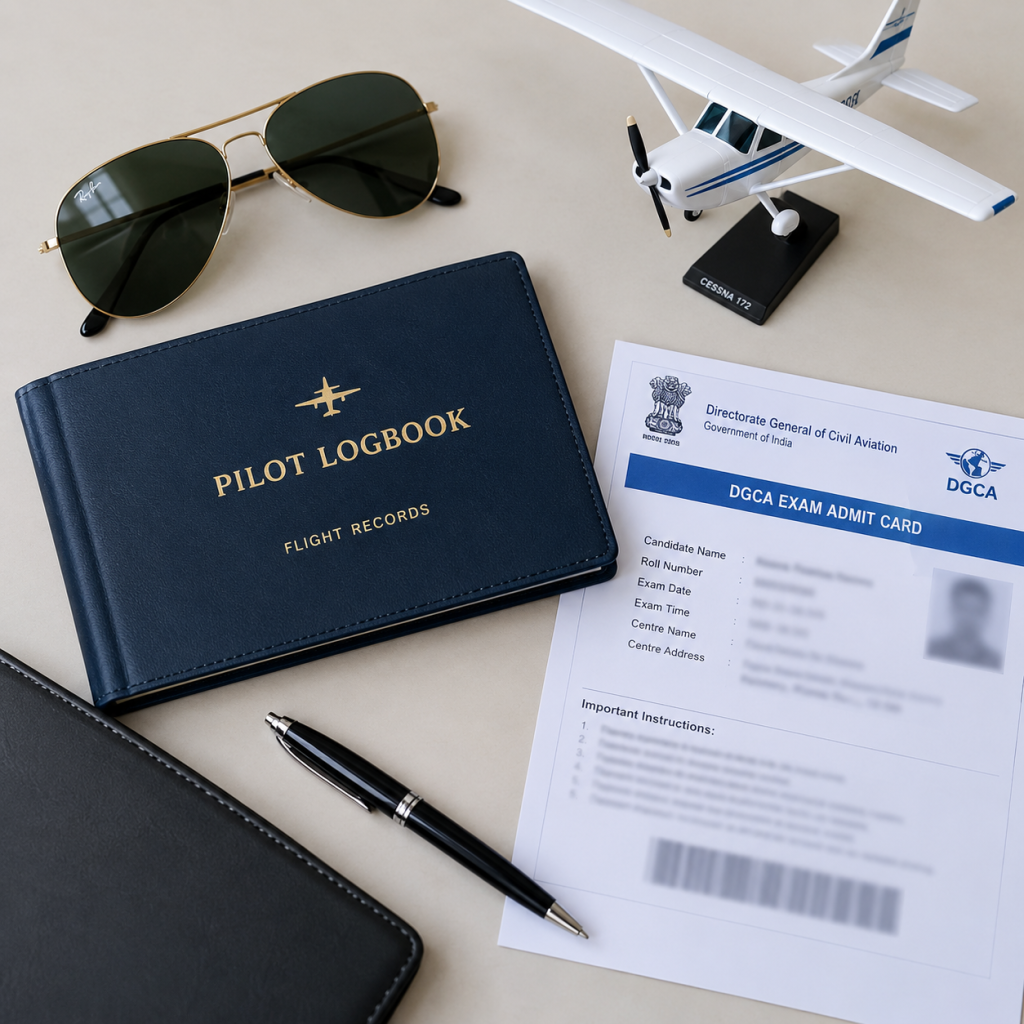
Here is the path in the order it actually happens.
Step 1: Check eligibility and get your medical booked. Confirm your subjects, age and Class 2 medical slot. Do this before any payment.
Step 2: Choose your route. You have two main routes in Kerala:
- Integrated or government academy route: apply to a programme such as RGAAT in Thiruvananthapuram, which is managed by the Kerala government and DGCA-approved. Admission is usually through an application and a written test on English, Maths, Physics, Reasoning and general aviation. Watch the official notice for dates, because windows can be short.
- Ground school plus flying school route: do DGCA ground classes locally, then do flying training at a chosen flight school in India or abroad. Not sure which to pick? This guide on pilot training in India vs abroad compares both, and the top features of a pilot training academy in Kerala gives you a checklist to judge any school.
Step 3: Register and get your DGCA computer number. This number identifies you for all DGCA exams. It is a common stumbling block. Aerowis includes computer number assistance as part of student support.
Step 4: Join DGCA ground classes. This is where you prepare for the written papers. Calicut-based Aerowis runs a six-month DGCA ground school covering regulations, navigation, meteorology, technical subjects and RTR(A).
Step 5: Clear DGCA exams. Papers are conducted by DGCA through its exam partner. Plan your attempts well.
Step 6: Start flying training. You log hours with an instructor, then fly solo, then complete cross-country and instrument work.
Step 7: Take the CPL skill test and get your licence. After 200 hours and the skill test, your CPL is issued.
Step 8: Prepare for airlines. Do type-rating or conversion, and prepare for airline assessments.
Key Insights
- Most delays come from skipped early steps (medical, computer number), not from flying itself.
- Ground school locally plus flying elsewhere is a practical way to control costs.
- The CPL needs a minimum of 200 flying hours, so compare per-hour rates and hidden costs.
- No academy can promise a job. Choose the one that prepares you best for airline selection.
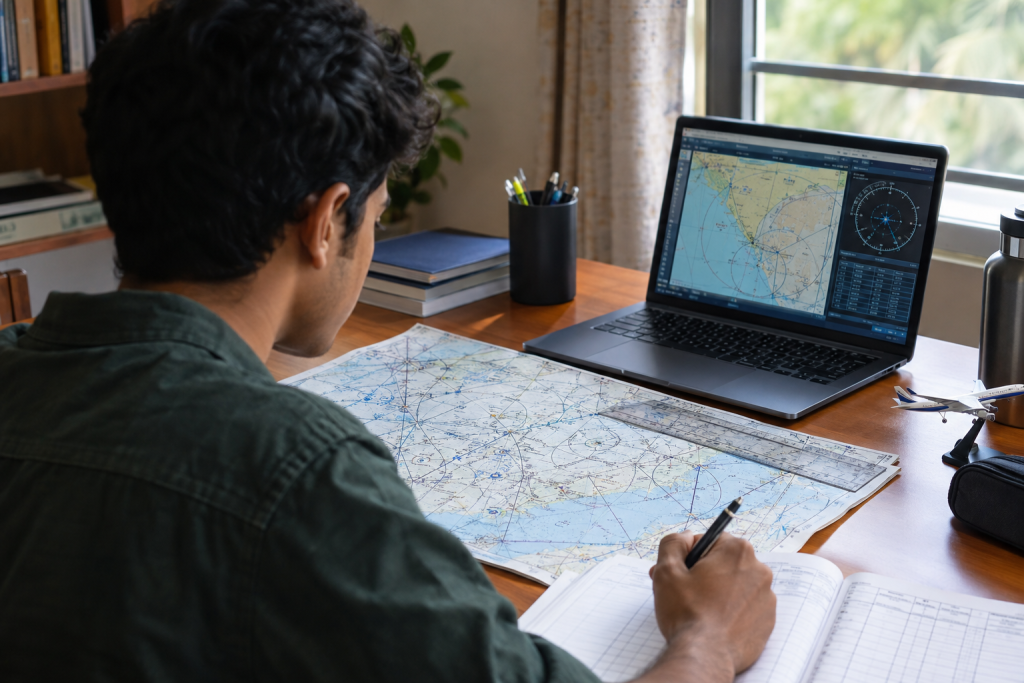
DGCA ground exams: what you will study
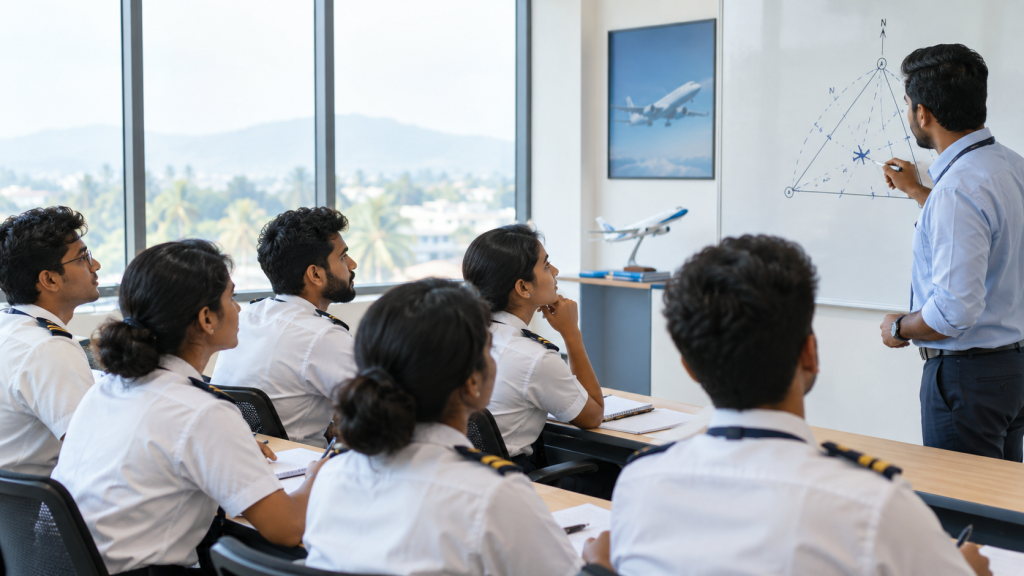
The written side is where most students either gain confidence or lose it. Know the papers before you start.
| Subject | What it covers (in simple words) |
|---|---|
| Air Navigation | Reading charts, calculating routes, wind and time |
| Air Regulations | Rules of the air, airspace, licences |
| Aviation Meteorology | Weather, clouds, forecasts, charts |
| Technical General | How aircraft, engines and instruments work |
| Technical Specific | Systems of the aircraft type you train on |
| RTR(A) | Radio telephony and licence for radio calls |
Practical tip: do not study these in isolation. Link them. When you learn weather, ask how it changes your navigation plan. Pilots pass because they connect subjects, not because they memorise pages. Consistency matters more than long late-night sessions, which is one of the most common flight training challenges students report.
Explore Aerowis DGCA Ground School for the six-month plan, or read what separates a good academy from an average one in top features of a pilot training academy in Kerala.
Pilot course fees in Kerala: what to budget
Costs vary widely, so treat all figures as approximate and ask each academy for a written breakup.
| Route | Approximate total | Notes |
|---|---|---|
| Private flying school (India) | ₹25 to ₹45 lakh | Depends on aircraft, location, weather days |
| Government academy | Up to about ₹55 lakh | Seats are limited, selection is competitive |
| DGCA ground classes only | A small fraction of total | Aerowis offers a 6-month programme |
Figures are indicative market ranges and can change. Confirm current fees directly with each institute.
Where the money goes
- Ground school and exam fees
- Flying hours (the biggest cost)
- Medical, licence and exam registration fees
- Accommodation, uniforms and headset
- Type rating after CPL (often missed in budgets)
Ways to manage the cost
- Compare per-hour flying rates and the number of hours included (our breakdown of training in India vs abroad shows where costs differ)
- Ask about hidden costs: extra hours, retests, simulator, landing fees
- Look at education loans and scholarships
- Start with ground school locally, then pick the flying school with full information
Pilot training in Kerala vs outside Kerala vs abroad
| Factor | Kerala | Other Indian states | Abroad |
|---|---|---|---|
| Ground school | Strong options (Calicut, Kochi, Thiruvananthapuram) | Plentiful | Varies |
| Flying weather | Monsoon can slow hours | Often more flying days | Often more flying days |
| Cost | Moderate | Moderate | Often higher with conversion costs |
| Licence | DGCA licence directly | DGCA licence directly | Needs DGCA conversion |
| Best for | Students who want home support | Students chasing faster hours | Students with a clear budget and plan |
Honest advice: many Kerala students take ground classes at home and fly elsewhere. That is a smart split. It keeps theory costs low, lets you pick the right flight school with better information, and avoids paying a big deposit for something you have not yet tested. Use these features of a good pilot training academy in Kerala when you compare flight schools.
If you fly abroad, plan for conversion flying and DGCA exams. Aerowis supports conversion flying and career guidance for these students.
Careers and salary after a pilot course
Once you hold a CPL, you can aim for:
- Airline first officer (the most common goal)
- Charter and private jet pilot
- Flight instructor
- Cargo and corporate aviation
- Aerial survey and utility flying
Salary: early-stage first officers in India generally earn in the lakhs per month, and pay rises with experience, aircraft type and rank. Exact figures depend on the airline and contract, so treat any single number you see online as a rough guide.
Important: no academy can promise a job. Be careful of anyone who does. A good academy prepares you for airline selection with interview training, group discussions and assessment practice. Aerowis states clearly that it does not guarantee placement, and instead supports airline preparation and career guidance. For more on building a flying career, browse the Aerowis pilot career guides.
Common mistakes to avoid
- Paying a full fee before the medical. Why it hurts: a failed medical can end your plan. Fix: book the DGCA medical first.
- Judging an academy by its brochure. Why it hurts: glossy photos do not show instructor quality or exam results. Fix: ask for a batch size, instructor profile, exam pass record and a written fee breakup. Our guide to the top features of a pilot training academy in Kerala lists what to check.
- Ignoring the DGCA computer number. Why it hurts: you cannot register for exams without it. Fix: apply in the first week of ground school.
- Budgeting only for the CPL. Why it hurts: type rating and airline prep come later. Fix: keep a reserve for the next stage, and read the common flight training challenges so retests and extra hours do not surprise you.
- Believing placement promises. Why it hurts: airlines hire on merit, market demand and assessments. Fix: choose the academy that prepares you best, not the one that promises most.
Why start with Aerowis Aviation in Calicut
If you are comparing options for pilot training in Kerala, ground school is the cheapest, lowest-risk place to begin, and it is where your foundation is built.
Aerowis Aviation is based in Calicut and states that it has trained 150+ cadets. Its programmes follow DGCA standards, and support includes:
- DGCA ground training by experienced instructors
- DGCA computer number assistance
- Medical support and guidance
- Conversion flying support
- Step-by-step career guidance, plus airline preparation such as ADAPT, group discussion and interviews
Want to know who will teach you? Meet the licensed commercial pilots who teach at Aerowis, or read more about Aerowis Aviation.
Key Takeaways
- You need Class 12 with Physics and Maths to begin.
- Book your DGCA medical before you pay big fees.
- Ground school takes about 6 months, while the full CPL typically takes 18 to 24 months.
- Budget roughly ₹25 to ₹55 lakh and get every cost in writing.
- Pick an academy with DGCA-focused teaching, clear support and honest promises.
Frequently asked questions
Can I become a pilot after 12th in Kerala?
Yes, you can. You’ll need Class 12 with Physics and Maths, a valid DGCA medical, and enrolment in DGCA ground classes, followed by flying training. The usual path ends with a Commercial Pilot Licence after at least 200 flying hours. Most students finish in 18 to 24 months.
Which subjects do I need for a pilot course after 12th?
Physics and Maths are the core subjects. Many academies also want English. If you’re from the commerce stream, you may still have a route, such as through NIOS, so check with the academy before you decide.
What’s the age limit for a pilot course in Kerala?
Most academies take students from 17 years old. You need to be 18 to be issued a Commercial Pilot Licence. Rules can change, so check your chosen academy’s latest notice.
How much does pilot training cost in Kerala?
The total usually falls between 25 lakh and 55 lakh rupees, depending on the academy, the aircraft and the number of flying hours. Ground school is a smaller part of that. Always ask for a written fee breakup that includes extra hours and retests.
How long does it take to complete a CPL?
It typically takes 18 to 24 months, including ground school and at least 200 flying hours. Weather, aircraft availability, exam attempts and medical issues can stretch that, so plan for some extra time.
Do I need a DGCA medical before joining?
Yes, and do it first. You start with a Class 2 medical before training, then move to Class 1 before the CPL. Getting it done early means you won’t spend money on ground school and then discover a medical problem.
Do pilot academies guarantee a job?
No genuine academy can. Airlines hire based on skills, merit and market demand. What a good academy can give you is airline preparation, interview practice and career guidance
Conclusion
A pilot course after 12th in Kerala is not one big decision. It is a series of small, smart steps: check eligibility, book your medical, build strong ground knowledge, choose the right flying school, and prepare for the airline stage.
Start with the part you control today. Strong DGCA ground school preparation makes every later step cheaper and faster. For more step-by-step help, browse the Aerowis blog or Explore our pilot courses .
Ready to Start Your Pilot Journey in Kerala?
Get a free eligibility check, a clear fee breakup and a step-by-step plan from the Aerowis team in Calicut.
Explore DGCA Ground School Call +91 8594 000 730 Email info@aerowis.com