

Table of Contents
Direct answer: The DGCA Class 2 medical is generally the starting point for aspiring pilots beginning flight training. The Class 1 medical is required for exercising Commercial Pilot Licence (CPL) privileges and is essential for a professional airline career. Conditions such as colour vision deficiencies, certain vision problems, uncontrolled blood pressure or diabetes, and some cardiac or neurological disorders may affect medical eligibility. However, the outcome depends on the specific condition, its severity, applicable DGCA standards, and any permitted corrective measures or specialist assessment.
Quick Facts
- Class 2 is generally the initial medical assessment for aspiring pilots and is conducted by DGCA-empanelled medical examiners.
- Class 1 medical examinations are conducted at DGCA-approved medical centres, including designated Air Force and civil aviation medical facilities.
- Class 1 medical validity is generally 12 months for many pilots, but the period can vary depending on age and applicable DGCA requirements.
- A Class 2 medical assessment or clearance may be required before Class 1; confirm the current DGCA procedure for your situation.
- Colour vision deficiencies can affect pilot medical eligibility, but the outcome depends on the specific deficiency and applicable DGCA assessment standards.
You’ve picked a flying school. You’ve set aside lakhs. Then the medical comes back “unfit.”
It happens more than people admit, and it’s almost always avoidable. Not the result itself, but the timing. The pilots who get hurt are the ones who test last.
This guide explains DGCA Class 1 vs Class 2 medical in plain English. You’ll see how they differ, what usually gets candidates rejected and how to check yourself early. We’ll also show where to fit the medical into your plan so it protects your money. This is general information, not medical advice. Only a DGCA-approved examiner or medical board can decide your fitness.
What is the difference between DGCA Class 1 and Class 2 medical?

The DGCA Class 2 medical is the basic fitness check for starting pilot training. The Class 1 medical is a deeper, stricter assessment that you need for a Commercial Pilot Licence and for working as an airline pilot. Class 1 covers more tests and is done at approved centres.
Here’s the side-by-side:
| Factor | Class 2 medical | Class 1 medical |
|---|---|---|
| Purpose | Entry check before training (student pilot licence, and eligibility for CPL training) | Required to hold a CPL and fly commercially |
| Who conducts it | DGCA-empanelled Class 2 examiners across India | DGCA-approved centres only (e.g., AFCME New Delhi, IAF and designated centres) |
| Depth | Vision, colour vision, hearing, blood pressure, blood and urine tests, general health, X-ray and ECG where indicated | More detailed: eye, ENT, lungs, cardiovascular, audiometry and sometimes psychological screening |
| When you take it | First step, before paying for training | After Class 2, before your CPL |
| Validity | Varies by age and source. Confirm with your examiner. | Generally 12 months, shorter for older pilots |
Sources disagree on Class 2 validity, so ask your examiner what’s printed on your certificate.
For CPL training in India, the baseline is Class 12 with Physics, Mathematics and English, age 17 or above and a DGCA Class 2 medical. Aerowis also guides students through the Class 1 medical, which is needed later. Check the full pilot course eligibility after 12th in Kerala.
How does the DGCA medical process work?
Think of it as a funnel. Each step filters out problems while they’re still cheap.
Step 1: Class 2 first Book with a DGCA-empanelled Class 2 examiner. Carry ID, glasses or lens prescriptions and any medical records.
Step 2: Fix or manage what’s flagged If the examiner notes an issue, ask whether it’s temporary, correctable or permanent.
Step 3: Class 1 at an approved centre Once Class 2 is cleared, book Class 1. Expect the full panel of tests. Aerowis helps with Class 1 and Class 2 medicals, your DGCA computer number and licensing paperwork. You can read how to apply for a DGCA computer number in our guide.
Step 4: Keep your certificate current Track the validity date. A lapsed medical stops your training and your conversion.
What tests are in the DGCA medical?
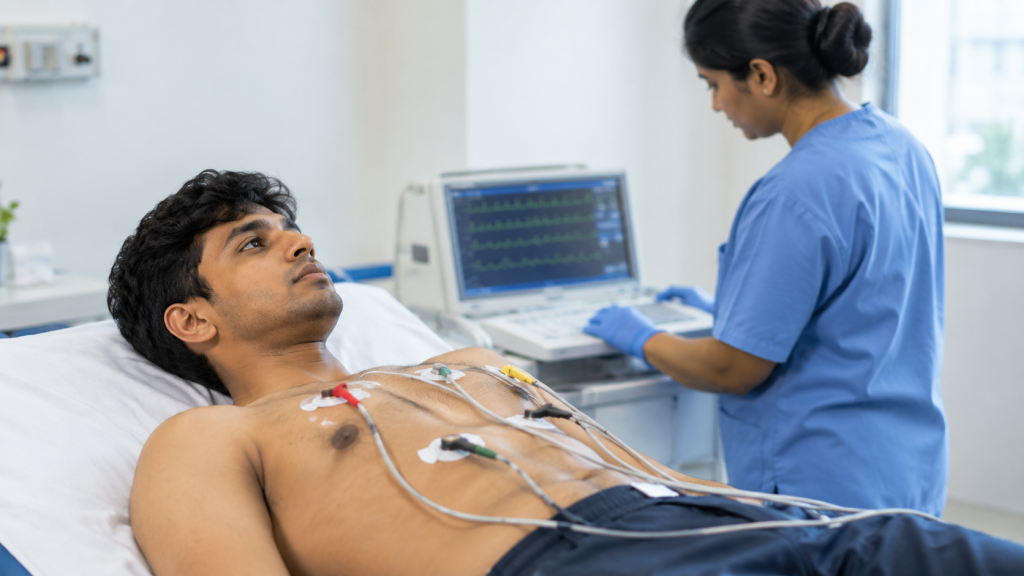
You can expect these categories, based on current guides. Your examiner will confirm the exact list.
- Physical exam: height, weight, BMI, blood pressure, pulse, general health
- Eyes: distance and near vision, colour vision (Ishihara-type testing), depth perception
- Hearing and ENT: audiometry and an ear, nose and throat check
- Heart and lungs: ECG, sometimes echocardiography at Class 1, and lung function tests
- Lab work: blood and urine tests
- Mental and neurological health: history, and psychological screening in some cases
What gets you rejected in a DGCA medical?
Rejections fall into three buckets. Knowing which one applies changes your next step.
Permanent disqualifiers
- Colour blindness. Multiple guides call it the most common permanent disqualifier. Pilots must read cockpit displays, lights and signals correctly.
- Epilepsy or a history of seizures.
- Severe structural heart defects.
- Certain psychiatric or neurological conditions.
Conditions that often mean “temporarily unfit”
- Vision that can’t be corrected to the required standard. Guides cite 6/6 correctable for Class 1.
- Uncontrolled blood pressure. If it’s brought under control, you may be reassessed.
- Diabetes, especially with complications.
- ECG abnormalities or heart rhythm problems.
- Hearing loss.
- High BMI with related complications.
- Substance dependence.
Avoidable rejections
- Incomplete or inconsistent documents
- Missing prior reports
- Not disclosing history
Reasons overlap across guides, and standards get updated. Ask your examiner for the current DGCA medical manual position on your specific case. Don’t rely on a blog, including this one, for a final answer.
Key Insights
- The medical is a gate, not a formality. It helps determine whether you meet the medical requirements for pilot training and licensing.
- Colour vision is an important factor. Check your colour vision early and consult a DGCA-approved medical examiner if you have concerns.
- Some health concerns can be managed. Blood pressure, weight and stress may improve with appropriate care, but medical eligibility depends on DGCA standards and individual assessment.
- Foreign-trained pilots may need an Indian medical assessment. Holding a foreign Class 1 medical does not automatically satisfy Indian DGCA requirements for licence conversion.
- Honesty protects your future. Disclose your medical history accurately to help avoid complications during assessment or licensing.
How to check early: a 6-step pre-screening plan

You can’t “pass early,” but you can find problems early. Do this in the order shown.
- Get a colour vision test first. Ask an optometrist for an Ishihara-type test. If it’s a problem, you’ll know before you spend on anything else.
- Update your eye prescription. Carry a recent report. Note whether your vision corrects to the required standard.
- Check your blood pressure over a week. A single high reading isn’t the story. A pattern is.
- Gather your history. Collect reports for any past surgery, injury, asthma, ear problems or long-term medicine.
- Book your Class 2 before any large payment. Pay only a small booking amount until it’s cleared.
- Plan Class 1 for the right moment. Because Class 1 validity is limited, time it with your CPL stage rather than too early.
Aerowis’ guidance is simple: get your medical checked early, so you know where you stand before you pay for training. If you want help lining it up with your plan, speak to an advisor at the Calicut admissions desk.
Class 1 medical for foreign-trained pilots
If you trained abroad, your foreign Class 1 is only part of the picture. Conversion generally requires a valid foreign Class 1 and an Indian Class 1 assessment. If your Indian Class 1 comes back unfit late in the process, you could lose months and flying fees.
Read the full list in our foreign CPL to DGCA conversion document checklist. And see how Aerowis structures this on the DGCA licence conversion page.
Planning costs? Our CPL cost comparison for India, the Philippines, South Africa, Greece and the US shows why a failed medical after paying is the most expensive mistake.
What happens if you’re declared unfit?
Don’t panic, and don’t argue with the examiner. Ask three questions:
- Is this temporary, correctable or permanent?
- What reports or retests would change the assessment?
- What is the formal process for review?
Guides describe outcomes such as “temporarily unfit” and “permanently unfit,” with review routes for the first. The details depend on your condition, so use the examiner’s written advice. If the answer is permanent, there are other aviation careers worth exploring. Our guide to starting a career in aviation covers them.
Common DGCA medical mistakes to avoid

1. Paying for training before the medical
- Why it’s bad: A permanent disqualifier makes the fees a loss.
- Fix: Clear Class 2 first, then commit.
2. Skipping the colour vision test
- Why it’s bad: It’s the most common permanent disqualifier, and no training can change it.
- Fix: Test it in week one.
3. Hiding medical history
- Why it’s bad: It can surface later and cause bigger delays.
- Fix: Disclose, bring records and ask what applies.
4. Going in tired, stressed or after a heavy night
- Why it’s bad: It can push blood pressure and heart readings out of range.
- Fix: Sleep well, eat lightly and avoid caffeine on the day.
5. Letting a medical lapse
- Why it’s bad: Training or conversion stops until you renew.
- Fix: Set calendar reminders 60 days before expiry.
6. Assuming a pass equals a job
- Why it’s bad: A medical only keeps the door open. Airlines select separately.
- Fix: Read does a pilot course guarantee a job? and plan airline preparation.
Ready for the next step? Aerowis’ DGCA ground school in Calicut starts the structured CPL ground training once your medical is clear. You can also explore the commercial pilot training and private pilot licence paths, or see all stages on the course board. For regulator information, see DGCA India.
Key Takeaways
- Class 2 is generally the first step for training; Class 1 is required for exercising CPL privileges.
- Check your colour vision early, as some colour vision deficiencies can affect medical eligibility.
- Confirm your medical requirements before paying a large training deposit.
- Ask a DGCA-approved medical examiner whether a medical concern requires further assessment or may be manageable under applicable standards.
- Track medical validity dates to help prevent delays during training or licence conversion.
Frequently Asked Questions
Q: What is the difference between DGCA Class 1 and Class 2 medical?
A: Class 2 is the entry-level medical for starting training. Class 1 is stricter and required for a CPL and airline flying. Class 2 is done by DGCA-empanelled examiners, while Class 1 is done only at DGCA-approved centres such as AFCME in New Delhi.
Q: Can I be a pilot if I’m colour blind?
A: Guides we reviewed list colour blindness as a disqualifying condition and the most common permanent reason for rejection. Because rules can have nuances, get a formal colour vision test and ask a DGCA-approved examiner for the current position before you spend on training.
Q: Do I need Class 2 before Class 1?
A: Several current guides say yes. DGCA requires a Class 2 clearance before you apply for Class 1. Confirm the sequence with your examiner or an advisor, because it affects when you should book appointments and pay fees.
Q: Can I wear glasses and still pass?
A: Guides say glasses or contact lenses are allowed if your vision corrects to the required standard, often cited as 6/6 for Class 1. Carry a recent prescription. Tell the examiner about any eye surgery or procedure.
Q: How long is the DGCA Class 1 medical valid?
A: Guides report 12 months for pilots under 60 and 6 months for pilots over 60. Check the validity printed on your certificate. Set a reminder at least 60 days before it expires so training or conversion never stops.
Q: When should I take the medical?
A: Before any large payment. Take Class 2 first, ideally right after deciding on a pilot career. Aerowis recommends checking your medical early so you know where you stand before you pay for training.
Conclusion: Test Your Fitness Before You Test Your Budget
The difference between DGCA Class 1 and Class 2 medicals is straightforward. Class 2 is generally the starting point for flight training, while Class 1 is required for exercising Commercial Pilot Licence privileges. Finding out about a medical concern late in the process can affect your training plans and expenses.
Check your colour vision, eyesight and blood pressure early. Confirm your Class 2 medical requirements before committing to major training expenses, then plan your Class 1 assessment around your CPL timeline.
Know Where You Stand Before You Pay
Connect with Aerowis for guidance on pilot training pathways, DGCA medical requirements, your computer number and licensing paperwork, so you can plan your next steps with greater clarity.
Talk to a Career Advisor Call +91 8594 000 730Meet aviation mentors at the AEROCONCLAVE Seminar on Saturday, 14 November 2026. Reserve your seat