
Table of Contents
Direct Answer
To convert a foreign CPL to an Indian DGCA licence, you generally need a valid licence issued by an ICAO member state, licence verification from the issuing authority, a valid foreign Class 1 medical where applicable, an authenticated pilot logbook, the required DGCA examination results, radio telephony approval and an application through the eGCA portal. Requirements may vary depending on your licence and training route, so verify the latest DGCA rules and documentation requirements before starting the conversion process.
Quick Facts
- Conversion is for pilots who trained abroad and want an Indian DGCA licence. It is generally required to pursue airline flying in India using a foreign CPL.
- Your foreign licence must meet DGCA requirements, including being issued by an ICAO Contracting State.
- The paperwork has two parts: documents from your training country and documents required in India.
- Your authenticated pilot logbook is an important document. DGCA uses it to verify your flying experience, required flight hours and other applicable experience criteria.
- Conversion does not guarantee a job or a specific processing timeline. DGCA makes the final licensing decision after reviewing your application and documents.
You finished your training. You hold a foreign CPL. You land in India ready to start airline preparation. Then someone asks for a licence verification letter that your school never mentioned, and your logbook doesn’t match the format DGCA wants.
That’s how a three-month conversion turns into nine. It’s rarely the flying that delays pilots. It’s the paperwork.
This guide lays out the foreign CPL to DGCA conversion documents you’ll need, in the order you’ll need them. We’ve split them into what to collect abroad and what to complete in India. We also flag the mistakes that cost foreign-trained pilots the most time.
What is DGCA licence conversion?

DGCA licence conversion is the process of turning a foreign commercial pilot licence into an Indian CPL. You submit verified documents, clear required exams and radio approvals, complete skill tests in India and apply through DGCA’s online system.
Here’s what that involves in practice:
- Who needs it: Pilots who completed flight training abroad and want to fly for Indian airlines.
- What it covers: Document review, DGCA exams, medical and radio requirements, conversion flying and the application itself.
- Who decides: DGCA. No school or agent can promise an outcome or a date.
DGCA’s published material specifies requirements for converting foreign CPL and ATPL licences, including a valid licence from an ICAO Contracting State and the prescribed application process. You can check the regulator directly at DGCA India and read about ICAO membership at ICAO.
What documents do you need to convert a foreign CPL to a DGCA CPL?
Below is the full checklist. It’s built from DGCA’s conversion guidelines and 2026 guides from flying schools. Rules change, so treat it as a working list and have it checked against DGCA’s latest requirements for your case.
Part A: Documents from your training country
| Document | Why DGCA wants it | Common snag |
|---|---|---|
| Valid foreign CPL (with IR/ME ratings if held) | Proof you hold a professional licence from an ICAO state | Licence lapsed or restricted |
| Licence verification letter from the issuing authority | Confirms your licence is genuine and in force | Requested too late. Start before you leave the country. |
| Valid foreign Class 1 medical | Shows you were medically fit under your licensing state | Expired by the time you apply |
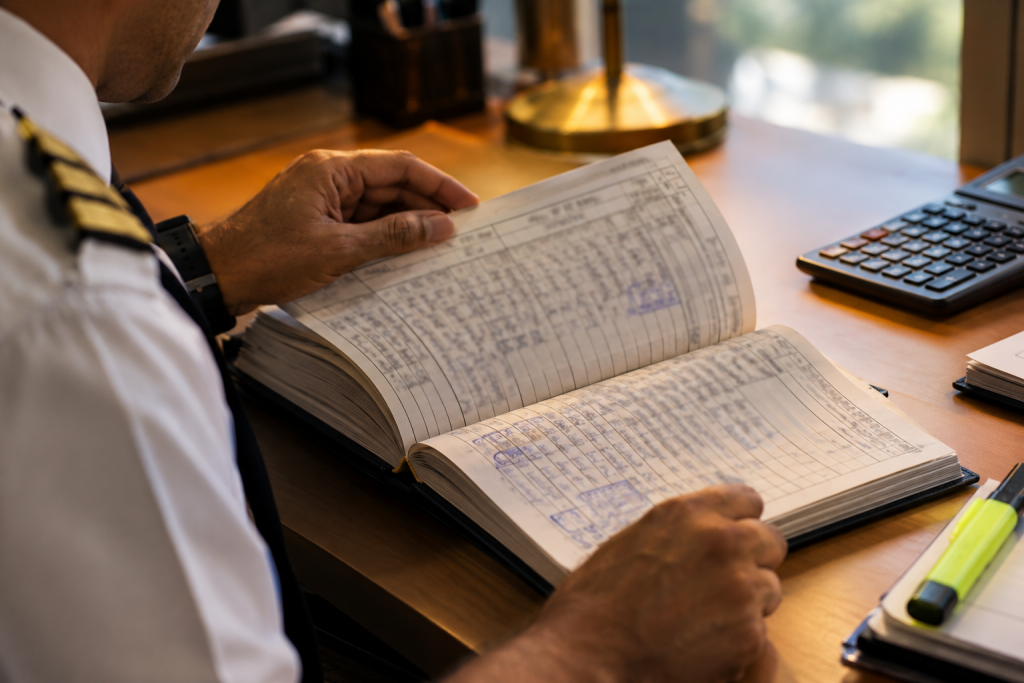
| Authenticated logbook | Confirms total time, cross-country time, instrument time, landings and recency | Handwritten entries that don’t add up |
| Training records and skill test or check reports | Evidence of tests passed, including instrument rating tests | Missing signatures or stamps |
Part B: Documents and approvals from India
| Item | Why it matters | Common snag |
|---|---|---|
| DGCA computer number | Your identity in DGCA’s system | Applying late |
| DGCA Class 1 medical (India) | Foreign-trained pilots generally need an Indian Class 1 assessment too | Colour vision or BP issues found late. See our medical guide. |
| RTR(A) and FRTOL | Radio telephony approval for flying in India | Not scheduled around exam dates |
| DGCA exams | Commonly Air Regulations and the Composite paper (Meteorology and Navigation). One published summary says to pass them within 60 months of applying. | Applying with an expired pass |
| Conversion flying and skill tests at a DGCA-approved FTO | You must take skill tests in India on at least one aircraft type that will be endorsed on your licence | Booking flying before documents are cleared |
| Instrument rating skill test (if needed) | Required in India if your foreign licence has no IR issued by the contracting state | Assuming your foreign IR carries over automatically |
| eGCA logbook entries and application | The formal application and fees | Name or date mismatches |
Part C: Identity and education records
Schools commonly ask for the items below. Confirm which apply to you.
- Passport, plus visa or entry stamps proving the training period
- Class 10 and Class 12 marksheets (Physics and Mathematics)
- Police clearance certificate (some training organisations list it)
- English proficiency evidence, which is often shown on your licence
How does the conversion process work, step by step?
Order matters. Doing things out of sequence is the most common reason people lose months.
Step 1: Get a document review before you travel Share your licence, logbook and training records with an advisor. Aerowis reviews these first to establish your current position, then outlines which requirements apply and in what order.
Step 2: Request your licence verification letter Ask your issuing authority to send it. Do this while you’re still in the training country. It can take time.
Step 3: Sort the Indian foundations Apply for your computer number, book your Class 1 medical, and plan RTR/FRTOL.
Step 4: Clear the DGCA exams Plan study time. Our team teaches the relevant subjects in DGCA ground school in Calicut.
Step 5: Complete conversion flying Aerowis helps arrange applicable conversion flying in India, looking at available options and suitable flying slots.
Step 6: Submit through eGCA Upload your documents, pay the applicable fees and keep your own copies of everything.
You can see how Aerowis structures this on the DGCA licence conversion page. It covers document review, conversion planning, conversion flying and documentation support.
Key Insights
- Licence verification can take time. Request verification from the issuing authority well before leaving your training country.
- Your logbook must be verifiable. Flight-hour totals, recency and cross-country experience should be accurate and consistent.
- Medical validity matters. Plan your Indian Class 1 medical around your application timeline and confirm the applicable validity requirements.
- Names must match across documents. Check that your passport, licence, marksheets and logbook use consistent spelling and personal details.
- Complete document checks before booking additional flying. Confirm DGCA’s requirements and obtain the necessary clearance before arranging conversion flights.
Does the process differ by country?
The core list is similar. The details around verification and recency differ by issuing authority. Use the pointers below as a conversation starter with your advisor, not as rules.
| Training country | Licence you hold | What to ask early |
|---|---|---|
| Philippines | CAAP | How and how fast the authority issues a verification letter |
| South Africa | SACAA | Letter of verification timing and logbook authentication format |
| Greece | EASA licence issued by the Greek authority | Whether your instrument and multi-engine ratings are clearly shown |
| United States | FAA | Recency evidence and how your logbook totals map to DGCA’s requirements |
| India (training) | DGCA | No conversion needed |
Aerowis works with training organisations across India, the Philippines, South Africa, Greece and the United States, so the team sees these differences regularly. For cost context, read our CPL cost comparison across five countries.
Foreign CPL conversion vs training in India: what’s the difference?
| Factor | Convert a foreign CPL | Train under DGCA in India |
|---|---|---|
| Extra paperwork | Verification letter, authenticated logbook, eGCA application | Standard DGCA training records |
| Exams | DGCA papers still required | DGCA papers part of training |
| Flying | Skill tests and conversion flying in India | Included in your CPL programme |
| Time risk | Document delays add months | Fewer external dependencies |
| Cost | Conversion adds its own line | Higher base fee, no conversion line |
Neither route is “better” for everyone. Choose based on budget, timeline and financing. If you’re still deciding, start with the Commercial Pilot Licence programme.
Common mistakes in foreign CPL to DGCA conversion
1. Requesting the verification letter after returning home
- Why it’s bad: It involves the foreign authority, and that adds weeks you can’t control.
- Fix: Ask for it before you leave, and track the request.
2. Submitting a logbook that doesn’t reconcile
- Why it’s bad: DGCA checks totals against your experience and recency.
- Fix: Have someone audit it line by line before authentication.
3. Letting medicals and exam passes expire
- Why it’s bad: You’ll repeat tests and pay again.
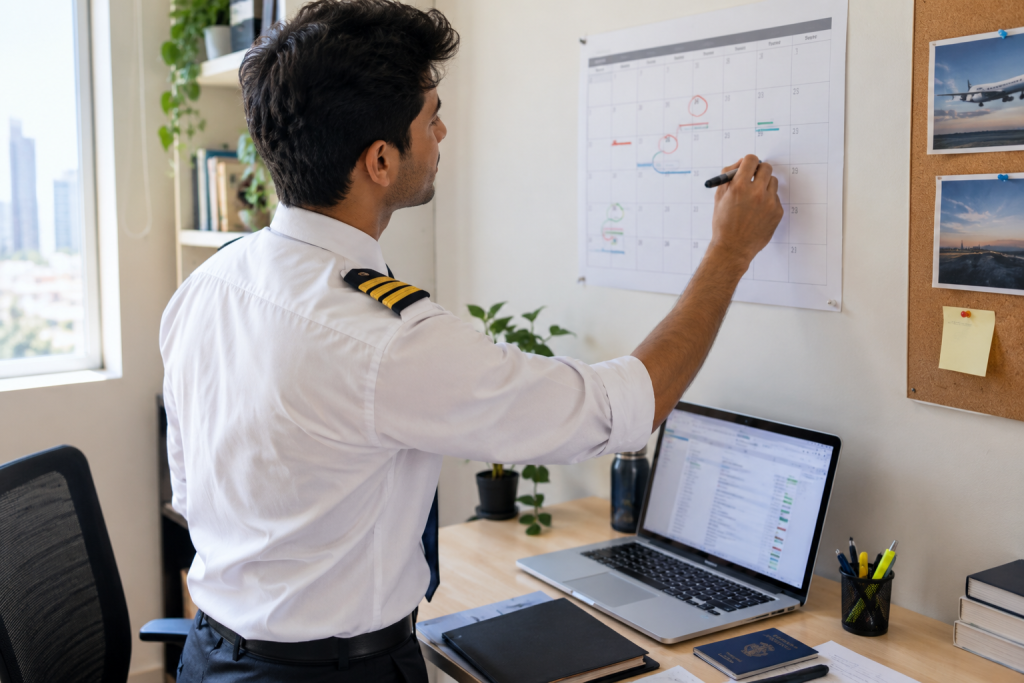
- Fix: Build a one-page timeline with expiry dates for every item.
4. Booking flying before the review
- Why it’s bad: You may fly hours you don’t need, or miss ones you do.
- Fix: Wait for the written requirement list.
5. Treating conversion as the finish line
- Why it’s bad: An Indian licence doesn’t guarantee a seat. Airlines still run selection.
- Fix: Plan type rating and airline preparation for CPL holders while your conversion runs. Read the airline selection process in India too.
How do you plan the timeline so nothing expires?
Think in blocks. Start the slow items first and stack the rest around them.
- Before leaving the training country: verification letter request, logbook authentication, certified copies.
- First month in India: computer number, Class 1 medical booking, RTR/FRTOL planning.
- Months two to four: DGCA exam preparation and sittings, with a buffer for resits.
- Then: conversion flying slot, skill tests, final eGCA submission.
There is no fixed timeline on any official page. It depends on your documents, medical status, exams, flying slot availability and DGCA processing. Ask your advisor for the steps in order and build your own calendar.
Key Takeaways
- Separate your checklist into documents from abroad and approvals required in India.
- Request the licence verification letter before leaving your training country.
- Review your logbook carefully and ensure all flight-hour totals are consistent.
- Track medical validity and examination deadlines to avoid delays.
- Obtain a written list of applicable requirements before booking conversion flying.
Frequently Asked Questions
Q: What documents are needed for foreign CPL to DGCA conversion?
A: Start with your valid foreign licence, a verification letter from the issuing authority, a valid foreign Class 1 medical, an authenticated logbook and training records. In India you’ll add a computer number, Class 1 medical, RTR/FRTOL, DGCA exams and an eGCA application.
Q: Which foreign licences can be converted?
A: DGCA’s published material covers foreign CPL and ATPL licences issued by an ICAO Contracting State. Rules can change, so ask an advisor to check your licence against DGCA’s latest requirements before you plan travel or pay for flying.
Q: Do I need conversion flying in India?
A: Usually yes. Applicants generally take skill tests in India on at least one aircraft type to be endorsed on the licence, and may need an instrument rating test if their foreign licence lacks one. Your document review will confirm what applies.
Q: How long does DGCA licence conversion take?
A: There’s no fixed timeline. It depends on your documents, medical status, exams, flying slots and processing time. Starting the verification letter early is the biggest time saver. Ask your advisor for the steps in order.
Q: Can Aerowis handle my conversion paperwork?
A: Aerowis supports paperwork, documentation and coordination, and helps organise your application. It can’t guarantee an outcome or a date, because DGCA decides. Keep your own copies of every document you submit.
Q: What happens after conversion?
A: You hold the Indian licence needed to pursue airline flying in India, but it doesn’t guarantee a job. Next come type rating and airline preparation for written exams, aptitude tests, group discussions and interviews.
Conclusion: Get the Documents Right Before Flying Starts
Foreign CPL conversion isn’t just about flying experience. The foreign CPL to DGCA conversion documents must be complete, accurate and submitted in the required order. Each document serves a purpose, and some may take time to obtain or verify.
Request your licence verification letter early, check your logbook thoroughly and track all expiry dates. Confirm the current DGCA requirements before booking additional flying.
Start Your DGCA Conversion with a Document Review
Discuss your foreign licence, pilot logbook and training records with Aerowis. Get guidance on the documents relevant to your case and the steps involved in the conversion process.
Explore DGCA Conversion Call +91 8594 000 730Prefer to talk first? Talk to an Advisor (Monday–Saturday, 9:30 am–5:30 pm).