
Pilot vs Cabin Crew: Which Aviation Career is Right for You?
Pilots and cabin crew are two of the most popular careers in the aviation industry, which offers exciting and successful career pathways. Both positions give you the opportunity to travel the world and work in a fast-paced environment, but they call for different expertise, responsibilities, and training. If you’re confused about which path to choose, this guide will help you decide.
Who is a pilot?
A pilot is responsible for flying the aircraft safely from one destination to another. Strong technical expertise, the ability to make decisions, and substantial training are required for this position.
Key Responsibilities:
- Managing and controlling the aircraft
- Navigating and communicating with air traffic control
- Ensuring the safety of passengers and flights
- Managing technical issues and emergencies
Skills Required:
- Strong analytical and problem-solving abilities
- Excellent focus and self-control
- Knowledge of aviation subjects like navigation and meteorology
Formal training, such as a Commercial Pilot License (CPL), DGCA-approved ground school, and flying hours, is necessary to become a pilot. Depending on the program, pilot training typically takes 18 to 24 months.
Who is the cabin crew?
Members of the cabin crew, also referred to as flight attendants or air hostesses, are in charge of making sure that passengers are comfortable and safe throughout the journey.
Key Responsibilities:
- Assisting passengers during boarding and in-flight
- Conducting safety demonstrations
- Taking care of passengers’ needs and offering customer service
- Managing emergency situations onboard
Skills Required:
- Strong interpersonal and communication abilities
- Confidence and a friendly personality
- Ability to stay calm under pressure
Typically, cabin crew training is shorter and concentrates more on safety protocols, grooming, and customer service.
Pilot vs Cabin Crew: Key Differences
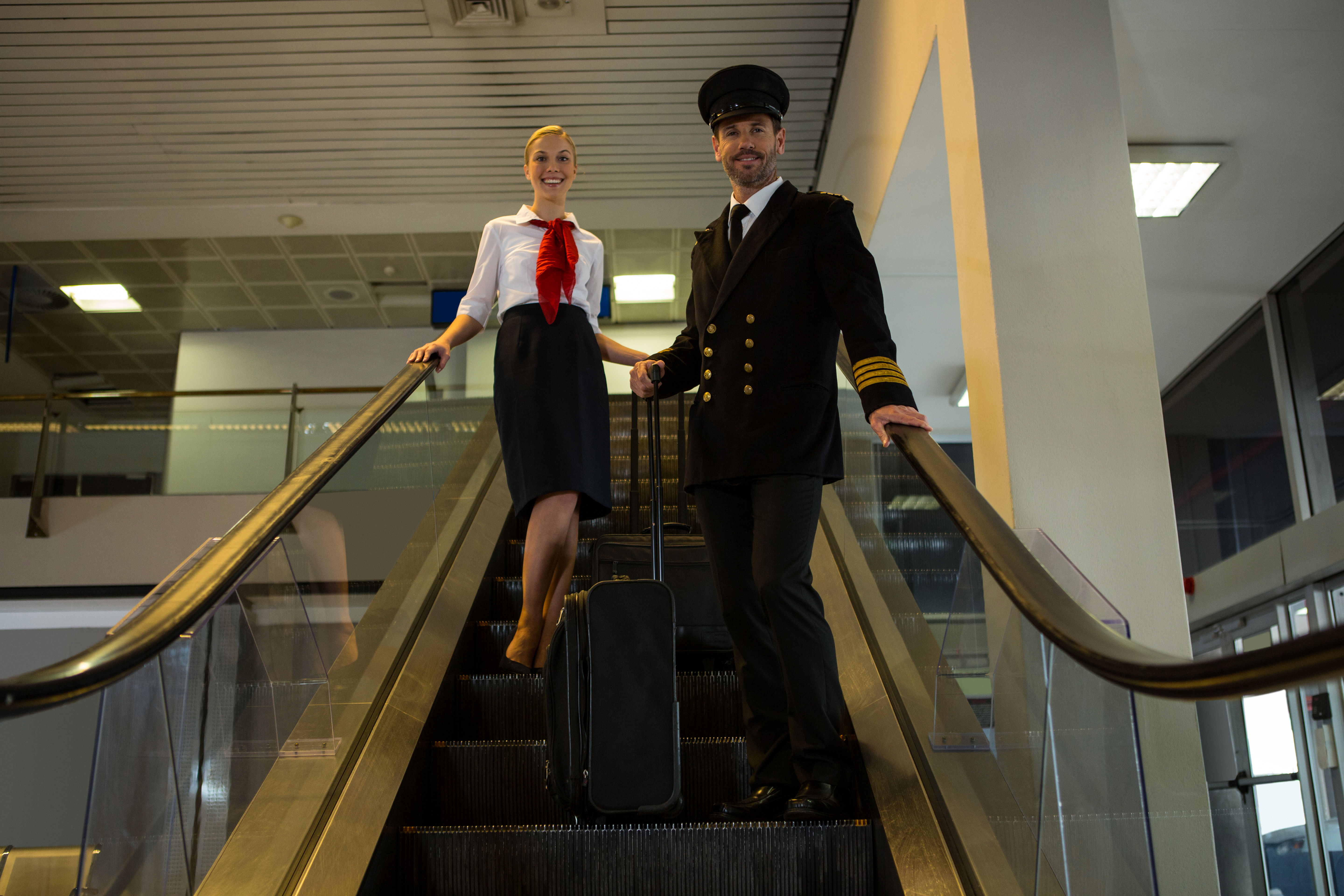
The primary differences between a pilot and a member of the cabin crew are their position and training. A pilot is in charge of operating the aircraft, which calls for a high level of technical expertise, the ability to make sound decisions, and substantial training, including earning a Commercial Pilot License (CPL). This process, which covers topics like navigation, meteorology, and aviation rules, often takes 18 to 24 months. Because they operate in the cockpit, oversee the aircraft’s systems, interact with air traffic control, and ensure overall flight safety, pilots hold a highly technical, responsible, and career-advancing role.
On the other hand, cabin crew members focus on passenger safety and comfort during the flight. Their training is shorter and emphasizes customer service, communication, grooming, and emergency procedures. They assist passengers, conduct safety demonstrations, and ensure a pleasant travel experience on board. Unlike pilots, cabin crew work in the cabin and interact directly with passengers, making this role more service-oriented and ideal for individuals who enjoy working with people and maintaining a friendly, professional presence.
Which career is right for you?
Your interests and skills will determine whether you want to be a pilot or a cabin crew member.
If you are enthusiastic about flying, like technical subjects, and are prepared for demanding training and responsibility, you should become a pilot.
If you enjoy connecting with people, have good communication skills, and would rather work in a service-oriented profession, you should choose cabin crew.
The best option will depend on your personality and professional objectives, but both professions provide exciting chances and exposure to the world.
Why Choose Aerowis Aviation Academy?
Choosing the correct training institution is essential if you want to become a pilot, and Aerowis Aviation Academy in Calicut is unique in this respect.
- DGCA-Aligned Training: Courses created in accordance with aviation authority guidelines
- Experienced Instructors: Gain knowledge from professionals in the field with practical experience.
- End-to-End Support: From ground school to licensing and career guidance
- Opportunities for International Training: Collaborations with foreign flight schools
- Comprehensive Guidance: Assistance with medicals, computer number, and exam preparation
Aerowis offers a planned path from instructional classes to cockpit readiness and has already trained a large number of aviation aspirants.
Conclusion
In the aviation sector, there are interesting career possibilities for both pilots and cabin personnel. Becoming a pilot is the best option if you want to operate an aircraft and assume significant responsibilities. On the other hand, if you enjoy customer interaction and travel, cabin crew can be equally fulfilling.
tag:

aerowis@dmin
 frequently Asked Questions